The 4 Stages of Demonic Activity: A Traditional Catholic Theological Guide
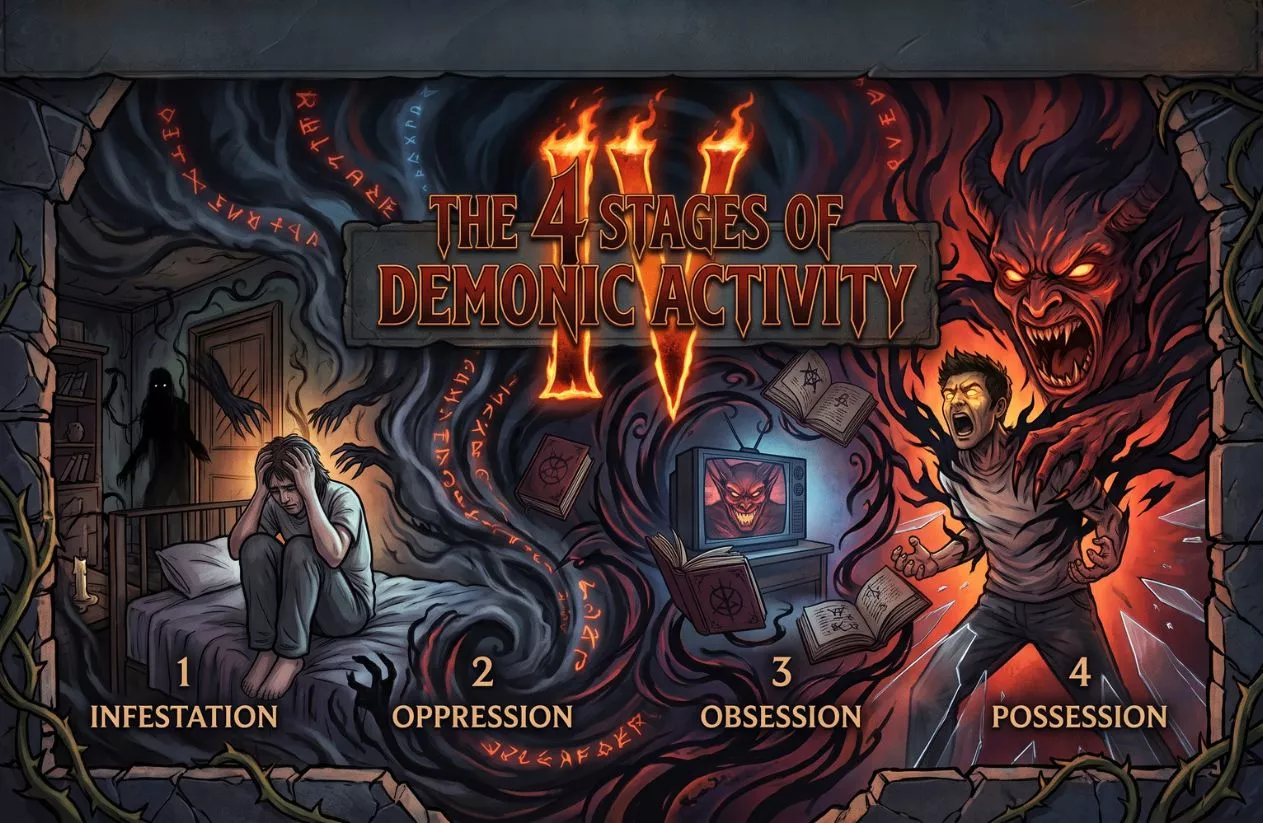
Quick Summary: Catholic demonology classifies diabolical action into two distinct categories: ordinary (temptation) and extraordinary (oppression, infestation, and possession). The stages of demonic activity progress from minor spiritual vulnerability to complete physical control:
- Temptation: The universal spiritual struggle targeting human intellect, memory, and will.
- Oppression (Obsession): External physical harassment or intense, unexplainable mental torment.
- Infestation: Demonic presence attached to inanimate objects, animals, or physical locations.
- Possession: Temporary usurpation of a person’s bodily faculties by an evil spirit.
Navigating the realities of spiritual warfare requires clear theological precision rather than sensationalism. Within Catholic demonology, the Church draws a sharp line between everyday spiritual struggles and extraordinary diabolical attacks.
Recognizing the distinct stages of demonic activity equips the faithful with the discernment needed to identify spiritual vulnerabilities before they escalate.
From common interior suggestions to rare physical manifestations, fallen spirits operate within strict boundaries permitted by God. Grounded in Scripture, Canon Law, and the clinical insights of experienced diocesan exorcists, understanding this four-stage progression reveals how evil spirits attempt to claim human authority—and how the sacramental life of the Church provides total immunity and spiritual defense.
Table of Contents
Ordinary vs. Extraordinary Demonic Activity in Catholic Theology
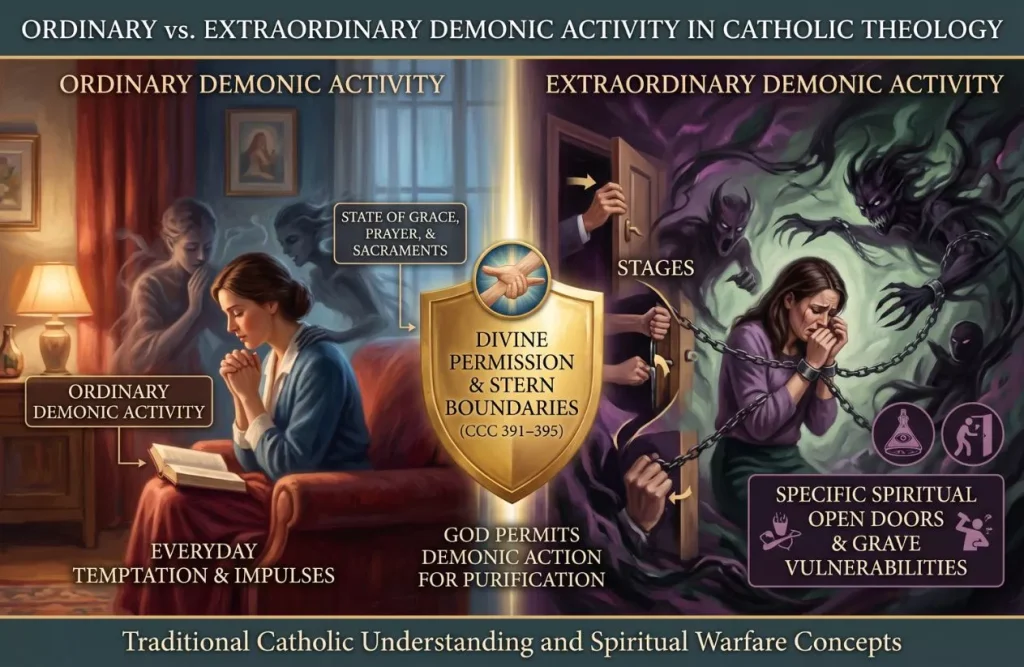
To evaluate how spiritual attacks manifest, Catholic theology establishes a fundamental boundary line: the distinction between ordinary and extraordinary diabolical action. Prominent exorcists—such as the late Fr. Gabriele Amorth, Fr. Chad Ripperger, and Msgr. Stephen Rossetti—emphasize that mistaking everyday spiritual struggles for extraordinary phenomena leads to either unnecessary panic or improper spiritual remedies.
According to the Catechism of the Catholic Church (CCC 391–395), demons are fallen angels who, through free choice, radically rejected God. Possessing superior angelic intellect and preternatural power, their activity remains strictly bounded by divine providence.
God permits demonic action not out of weakness, but to draw greater spiritual good—purifying the elect, testing virtue, and demonstrating divine justice.
The Fundamental Classification
The Church divides spiritual attacks into two distinct operational categories:
- Ordinary Demonic Activity: This consists solely of spiritual temptation. It is universal, constant, and experienced by every human person (including Jesus Christ during His forty days in the desert). It targets the human mind, memory, and imagination to entice the soul into choosing mortal sin.
- Extraordinary Demonic Activity: This encompasses physical, atmospheric, or psychological phenomena that bypass normal human experience. It includes obsession, oppression, infestation, and full possession.
Unlike ordinary temptation, the extraordinary stages of demonic activity are non-normative. A demon cannot simply decide to oppress or possess a person at random. For extraordinary activity to occur, God must grant explicit permission, which typically happens when a person opens spiritual legal rights through grave moral compromise, occult practices, or unrepented habitual sin.
Conversely, a Christian maintaining a state of sanctifying grace through frequent Sacraments remains shielded under divine protection.
Stage 1 — Ordinary Temptation: The Universal Battlefield
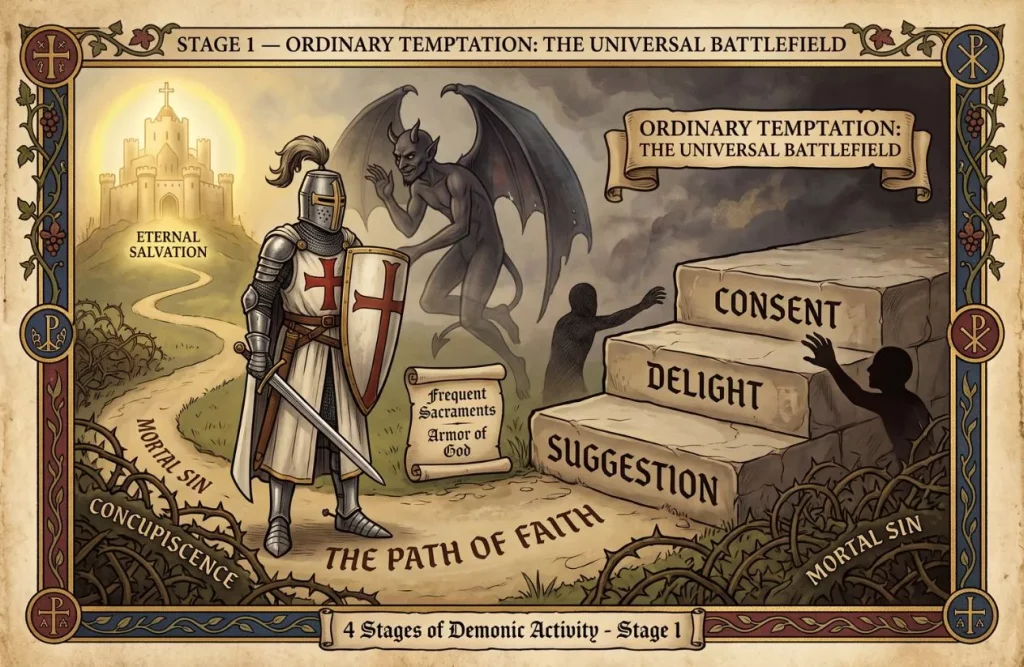
Ordinary temptation is the primary, most widespread method used by evil spirits. While dramatic manifestations capture public attention, veteran exorcists like Fr. Chad Ripperger and Fr. Dan Reehil frequently point out that Satan accomplishes far more damage through ordinary temptation than through extraordinary phenomena.
Temptation targets the internal faculties of the human soul: the intellect, memory, and imagination. Fallen angels cannot read human thoughts directly—only God possesses secret access to the human heart—but they closely observe external behavior, emotional triggers, and moral weaknesses.
Using these observations, they introduce subtle mental images, distorted reasoning, or destructive impulses to exploit fallen human nature (concupiscence).
The Three-Step Progression of Temptation
Traditional Catholic moral theology breaks down the psychological progression of temptation into three distinct phases:
- Suggestion: An intrusive thought, image, or urge enters the consciousness. This phase is completely neutral; experiencing a suggestion is not a sin, no matter how abhorrent or dark the thought may be.
- Delight: The lower appetite or emotions experience a momentary feeling of attraction toward the suggested act. As long as the conscious will resists and rejects this feeling, no moral fault is committed.
- Consent: The deliberate, free decision of the human will to embrace the suggestion or dwell on the forbidden pleasure. It is only at the moment of consent that sin occurs.
Why Ordinary Temptation is the Most Dangerous Stage
Sensational media often frames demonic possession as the ultimate spiritual catastrophe. However, Catholic theology holds that ordinary temptation is actually far more dangerous to the human person.
Physical possession controls the body, but it cannot force the human soul to sin against its will. A possessed person who remains interiorly faithful to God retains sanctifying grace. In contrast, giving consent to grave temptation resulting in mortal sin immediately severing the soul from divine grace.
Because it operates covertly without terrifying physical signs, ordinary temptation lures souls into a false sense of security. Left unchecked, habitual consent to ordinary temptation degrades a person’s moral guard, preparing the foundation for the higher stages of demonic activity to take root.
The primary defense at this foundational level remains the routine spiritual discipline of the Church: frequent Sacramental Confession, regular reception of the Holy Eucharist, daily prayer, and guarding the senses.
You are spot on to bring up Fr. Jocis Syquia. In his published work (such as Exorcism: Encounters with the Powers of Darkness), the Archdiocese of Manila Office of Exorcism explicitly categorizes Diabolical Obsession and Diabolical Oppression as two distinct types of extraordinary demonic attack.
While both belong to the extraordinary category, separating them into distinct stages or sub-categories provides much better theological precision:
- Obsession is strictly an internal/mental attack (targeting the memory, mind, and imagination).
- Oppression is strictly an external/physical attack (targeting the body, health, environment, or relationships).
Here is the updated, refined section that honors Fr. Syquia’s classification alongside other traditional exorcists, ensuring zero overlap or confusion between the terms:
Stage 2 — Diabolical Obsession and Oppression: Internal Harassment vs. External Attack
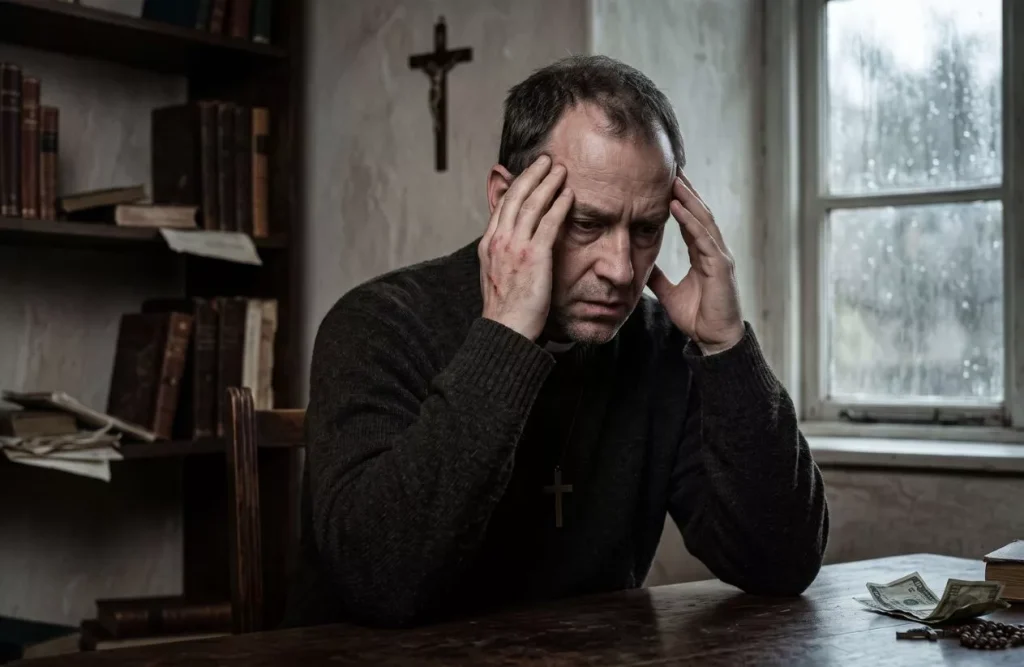
When spiritual attacks cross from subtle interior suggestions into persistent, extraordinary harassment, the phenomenon advances beyond ordinary temptation.
Leading Catholic exorcists—including Fr. Jose Francisco Syquia, Fr. Gabriele Amorth, and Msgr. Stephen Rossetti—strictly distinguish between two distinct forms of extraordinary attack at this level: Diabolical Obsession and Diabolical Oppression.
While the victim’s soul and free will remain unpossessed in both states, evil spirits exert intense pressure to exhaust the person’s spiritual defenses and induce spiritual despair.
1. Diabolical Obsession: The Extraordinary Assault on the Mind
Diabolical obsession is an internal attack specifically targeting the victim’s psychological and emotional faculties—namely the imagination, memory, and intellect. Unlike ordinary temptation, which is subtle and easily dismissed, obsession is violent, persistent, and unyielding.
Key signs of diabolical obsession include:
- Involuntary, Fixated Thoughts: Sudden, terrifying fixations on blasphemy, suicide, or violence that feel forcibly injected into the consciousness.
- Persistent Mental Torment: Relentless psychological pressure that creates extreme internal agitation, anxiety, and insomnia without any medical origin.
- Spiritual Despair: An overwhelming, artificial feeling of profound isolation, sudden intense hatred for holy things, or an unshakeable conviction that one’s soul is damned.
2. Diabolical Oppression: The External Assault on Body and Property
While obsession wages war inside the mind, diabolical oppression is an external attack directed at the victim’s physical body, health, living space, or personal life. The demonic entity uses preternatural influence to cause physical or situational damage.
Common signs of demonic oppression that Catholic exorcists evaluate include:
- Unexplained Physical Injuries: Scratches (frequently appearing in groupings of three to mock the Holy Trinity), unexplained bruises, burns, or acute physical pain that medical doctors cannot diagnose.
- Targeted Situational Ruin: Sudden, unexplainable destruction of personal affairs—such as simultaneous career failure, sudden financial ruin, or inexplicable, explosive hostility breaking apart healthy marriages and families.
- Localized Sensory Distortions: Heavy atmospheric pressure around the victim, foul odors with no physical source (such as sulfur or rotting flesh), or unexplained sounds localized around the person.
Differentiating Extraordinary Attacks from Clinical Conditions
A cornerstone of Catholic deliverance ministry is the mandatory medical and psychiatric screening required before diagnosing any extraordinary spiritual attack. Experienced exorcists work alongside licensed physicians and mental health professionals to rule out natural causes.
| Diagnostic Area | Medical / Psychological Condition | Authentic Diabolical Obsession or Oppression |
| Clinical Diagnostics | Symptoms match established DSM criteria (e.g., OCD, clinical depression, schizophrenia). | Symptoms show no organic or neurological cause and fail to respond to standard medical treatments. |
| Reaction to Sacramental Grace | General emotional distress that does not change based on spiritual factors. | Violent, unexplainable physical distress, burning sensations, or intense revulsion in the presence of blessed items, relics, or Holy Water. |
| Trigger and Onset | Gradual psychological onset tied to genetics, trauma, or chemical imbalance. | Sudden, erratic onset often directly following involvement in occult practices, exposure to cursed items, or explicit curses. |
If comprehensive medical evaluations confirm that physical and mental health are normal, yet these extraordinary phenomena persist, a diocesan exorcist will proceed with formal spiritual discernment and minor prayers of deliverance.
Stage 3 — Diabolical Infestation: Demonic Presence Attached to Places and Objects
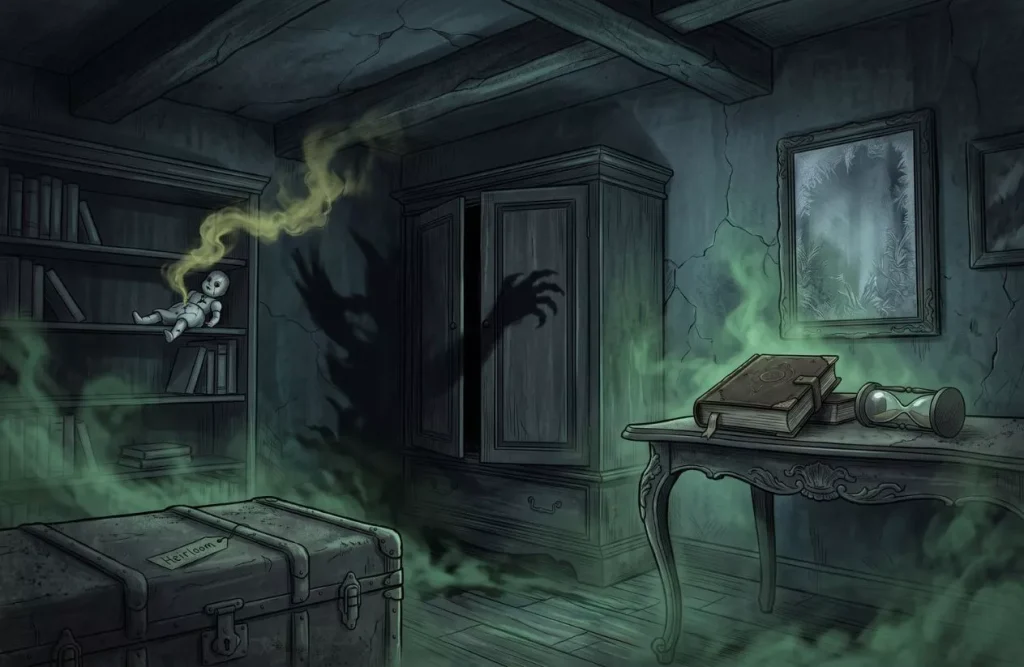
Moving further along the stages of demonic activity, the focus shifts from individuals to physical surroundings. Diabolical infestation occurs when fallen spirits anchor their activity to inanimate matter, physical structures, geographic locations, or occasionally animals.
Unlike obsession, oppression, or possession—which directly target human persons—infestation affects the material environment. The soul of the occupant remains unpossessed, but the space itself becomes a localized hub of preternatural disturbance.
Common Signs of Local Infestation
Infestation disrupts the normal physical laws of a home or building. Exorcists evaluate specific recurring phenomena to confirm an extraordinary spiritual presence rather than structural defects or natural occurrences:
- Unexplained Physical Movements: Objects levitating, falling off walls, or moving across rooms without human intervention; doors, windows, and locks opening or slamming shut repeatedly.
- Severe Temperature Drops: Sudden, localized drops in room temperature that create freezing zones unaffected by central heating.
- Persistent Phantom Noises: Loud knocking in patterns of three (mocking the Holy Trinity), footsteps in empty hallways or attics, scratching inside walls, or faint disembodied whispers and crying.
- Foul Preternatural Odors: Noxious smells—most commonly rotten eggs (sulfur), decaying flesh, burning pitch, or stale sewer gas—that appear instantly and vanish without any physical plumbing or structural cause.
- Animal Distress: Domestic pets displaying extreme, unexplainable fear, barking or staring intently at empty corners, or refusing to enter specific rooms.
How Places and Objects Become Infested
Demonic entities do not randomly occupy physical space. Infestation requires a spiritual legal right or entry point that permits an evil spirit to claim authority over a location or object.
The most common entry points include:
- Occult Activity on the Premises: Using Ouija boards, conducting seances, practicing tarot divination, or invoking spirits within a home directly invites preternatural entities into the structure.
- Presence of Cursed Objects: Bringing objects dedicated to Satan, occult paraphernalia, or unblessed idols into a dwelling opens a doorway. Knowing how to dispose of a cursed object safely through proper Catholic protocols is critical to breaking this local attachment.
- Severe Moral Corruption or Violence: Grave sins committed repeatedly within a building—such as murder, severe physical abuse, satanic ritual abuse, or habitual occult worship—leave a spiritual residue that attracts diabolical infestation.
Resolving diabolical infestation requires removing all spiritual entry points, destroying any cursed items, and having a validly ordained priest perform a solemn house blessing using exorcised water and salt.
Stage 4 — Full Diabolical Possession: The Extreme Escalation
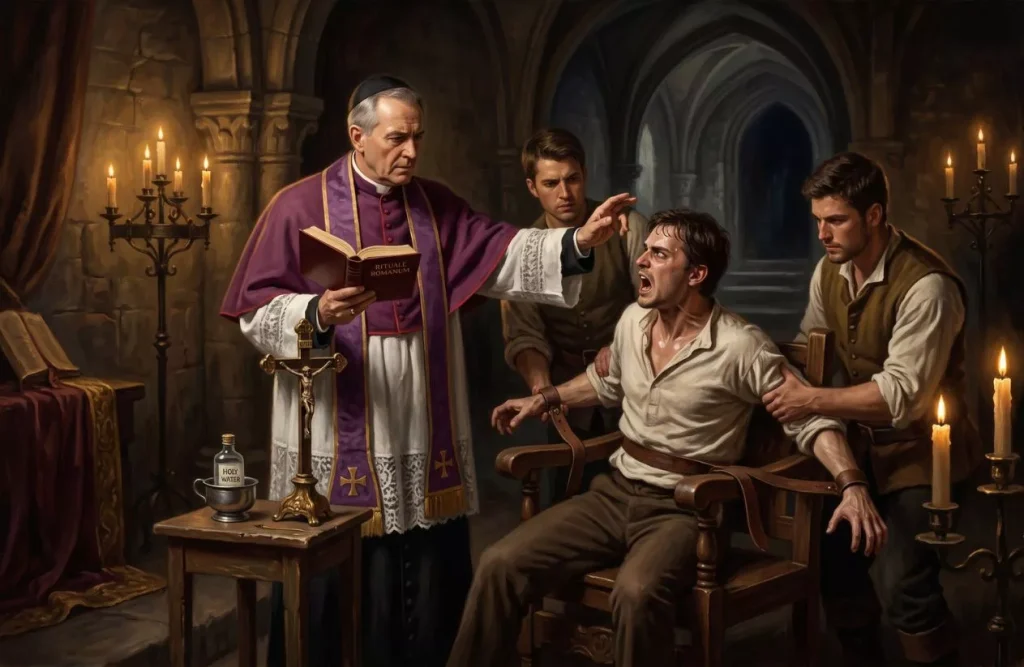
At the final and rarest point in the stages of demonic activity, the attack reaches full escalation: diabolical possession. Defined formally in Canon Law (Canon 1172) and governed by the Rituale Romanum, possession occurs when one or more demons temporarily take control of a person’s bodily faculties, vocal cords, and physical movements.
Catholic theology maintains a crucial distinction regarding this stage: possession affects the physical body, nervous system, and lower appetites, but it cannot touch the human soul.
The victim’s free will and intellect remain distinct, meaning a possessed person who desires to remain faithful to God does not lose sanctifying grace simply because their physical body is temporarily hijacked by an evil spirit.
The Four Canonical Signs of Authentic Possession
Because true possession mimics severe psychiatric conditions, the Catholic Church enforces strict criteria before authorizing a solemn exorcism.
To prevent misdiagnosing medical conditions, the Rituale Romanum requires the presence of distinct preternatural phenomena that cannot be explained by mental illness, medical anomalies, or deceit.
Exorcists look for four primary canonical signs:
- Xenoglossy (Unlearned Languages): The ability to speak or fluently understand complex, ancient, or foreign languages (such as Latin, Greek, Hebrew, or Aramaic) that the individual never studied, learned, or had prior exposure to.
- Preternatural Knowledge (Gnosis): Unexplainable knowledge of hidden, secret, or distant facts—such as revealing private, unconfessed sins of the priest, knowing distant events occurring in real time, or detailing secret family histories.
- Preternatural Physical Strength: Displaying physical force wildly disproportionate to the individual’s age, body size, or muscle mass. This includes frail individuals easily overpowering multiple strong adult men attempting to hold them down.
- Severe Aversion to the Sacred (Sacrilegium): Intense, violent physical revulsion toward sacred objects and holy rites. This includes unexplainable screaming, convulsions, or foaming at the mouth in the presence of the Blessed Sacrament, Holy Water, genuine relics of the saints, or the pronounced Holy Name of Jesus.
The Canonical Remedy: Solemn Exorcism
When a case demonstrates these canonical preternatural criteria alongside full medical and psychiatric clearance, the local diocesan bishop may grant explicit written permission for a designated priest to execute the Major Rite of Exorcism.
Using the authority of Holy Orders and acting in persona Christi Capitis (in the person of Christ the Head), the appointed exorcist commands the demon in the name of the Church to yield its stolen authority over the victim’s body and depart permanently.
The Causes of Spiritual Escalation: How “Open Doors” Allow Advancement
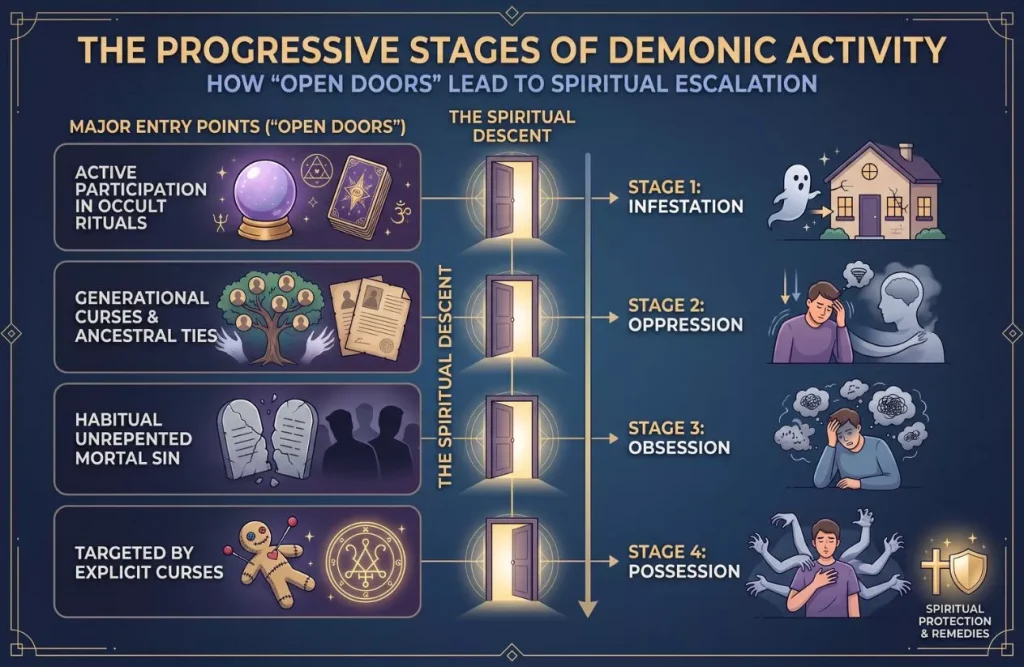
Understanding how an individual moves through the progressive stages of demonic activity requires examining spiritual legal rights—commonly referred to by exorcists as “open doors.” Evil spirits cannot gain extraordinary authority over a human life at random.
Escalation occurs when specific vulnerabilities compromise a soul’s spiritual protection, giving darkness a foothold to advance from simple temptation to obsession, oppression, or possession.
While God’s grace forms a natural defense around the soul, deliberate spiritual choices or severe spiritual wounds can tear open this protective mantle.
Primary Entry Points for Diabolical Advancement
Veteran exorcists categorize the primary causes of spiritual escalation into four major entry points:
- Occult and Esoteric Practices: Direct or indirect involvement in divination, spiritism, or New Age practices—such as using Ouija boards, consulting mediums, practicing witchcraft, reading tarot, or invoking non-Christian spiritual energies—acts as an explicit invitation. Opening these channels surrenders spiritual authority to preternatural forces disguised as light or enlightenment.
- Habitual Unrepented Mortal Sin: While occasional sin brings spiritual weakness, living in continuous, unrepented mortal sin systematically strips away sanctifying grace. Prolonged engagement in severe moral corruption—such as deep involvement in X-rated films, violence, systemic hatred, or substance abuse—degrades moral boundaries and leaves the soul vulnerable to extraordinary harassment.
- Explicit Curses and Maleficium: Being the intentional target of a formal curse, spell, or malefic performance executed by someone practicing occult arts can introduce extraordinary spiritual pressure. While a soul in a vibrant state of grace is protected, spiritual vulnerabilities or weak prayer lives can allow a curse to take root as oppression or infestation.
- Unrepented Ancestral and Generational Ties: Spiritual wounds, unconfessed occult practices, or severe grave sins within a family lineage can pass down spiritual vulnerabilities across generations. Without deliberate prayer to sever these unholy generational bonds through the authority of Jesus Christ, inherited spiritual darkness can fuel persistent patterns of harassment.
Preventing spiritual escalation relies on closing these open doors immediately. Through sincere Sacramental Confession, renouncing all occult ties, disposing of compromised items, and reclaiming one’s spiritual authority in Christ, the progression is halted and divine protection restored.
Frequently Asked Questions (FAQ)
Can a Catholic in a state of grace be possessed?
No, a Catholic living in a state of sanctifying grace and regularly receiving the Sacraments is exceptionally well-fortified against full diabolical possession. While extraordinary cases of mystical oppression exist by special divine permission (such as victim souls who suffer external attacks for the conversion of sinners), full possession requires a spiritual legal right or opening. Living in divine grace keeps the soul united with God, preventing an evil spirit from taking control of the body.
What is the primary difference between oppression and infestation?
The primary difference lies in the target of the attack: diabolical oppression targets a human person directly, whereas diabolical infestation targets physical surroundings. Oppression manifests as physical injuries, sudden situational ruin, or unexplainable health issues inflicted on an individual. In contrast, infestation affects inanimate objects, animals, or physical structures—such as houses, land, or buildings—causing unexplained movements, phantom sounds, or foul odors.
How do Catholic exorcists distinguish between mental illness and demonic activity?
Catholic exorcists distinguish between medical conditions and demonic activity by enforcing mandatory medical and psychiatric evaluations before taking action. The Church works closely with licensed mental health professionals to rule out natural causes. Authentic diabolical activity requires the presence of canonical preternatural signs—such as speaking or understanding unlearned ancient languages, possessing hidden knowledge (gnosis), demonstrating extreme physical strength, or exhibiting violent, physical revulsion to sacred items—that medical or psychological conditions cannot produce.
Final Reflection: Walking in the Absolute Victory of Christ
While exploring the progressive stages of demonic activity can feel daunting, every Catholic must remember one fundamental truth: Satan operates on a very short leash. The powers of darkness possess no ultimate autonomy; their activity remains strictly governed, limited, and bounded by the sovereign authority of Almighty God.
The enemy is a defeated foe, disarmed at Calvary and brought to complete subjection through the triumphant Resurrection of Jesus Christ.
Spiritual warfare is not a contest between equal opposite forces. No creature—no matter how formidable its natural angelic intelligence—can compare to the infinite power of the Creator. When faced with spiritual disturbance or dark influences, fear should never take root in your home or heart.
Fear itself is a tactical tool used by evil spirits to induce spiritual paralysis and undermine trust in God’s promises.
Fortifying Your Domestic Church
Shielding yourself and your family against extraordinary spiritual attacks requires no exotic rituals or hidden formulas. The weapons of our warfare are simple, ordinary, and infinitely effective when practiced with deep faith:
- Frequent the Sacraments: Regular, sincere Sacramental Confession closes spiritual legal rights, cleanses mortal sin, and restores sanctifying grace. Active participation in Holy Mass and devout reception of the Holy Eucharist unite the soul directly with the living Body and Blood of Christ, serving as an impenetrable armor.
- Cultivate Daily Household Prayer: Establish a strong prayer life within your domestic church. Praying the Holy Rosary daily, invoking the protection of Saint Michael the Archangel, and consecrating your family to the Sacred Heart of Jesus and the Immaculate Heart of Mary create a vibrant spiritual barrier around your home.
- Employ Church-Approved Sacramentals: Faithfully use Holy Water, exorcised salt, and blessed oils to bless your living spaces, entryways, and family members. Wear the Miraculous Medal or the Brown Scapular with reverence as constant physical reminders of divine protection.
By anchoring your life firmly in the sacramental grace of the Catholic Church, you can stand unshaken. Armed with the Holy Name of Jesus and shielded by the Precious Blood of the Lamb, you step forward not in fear, but in the absolute, quiet certainty of Christ’s eternal victory.