Why Demons Fear Holy Water and Blessed Salt (According to Catholic Exorcists)
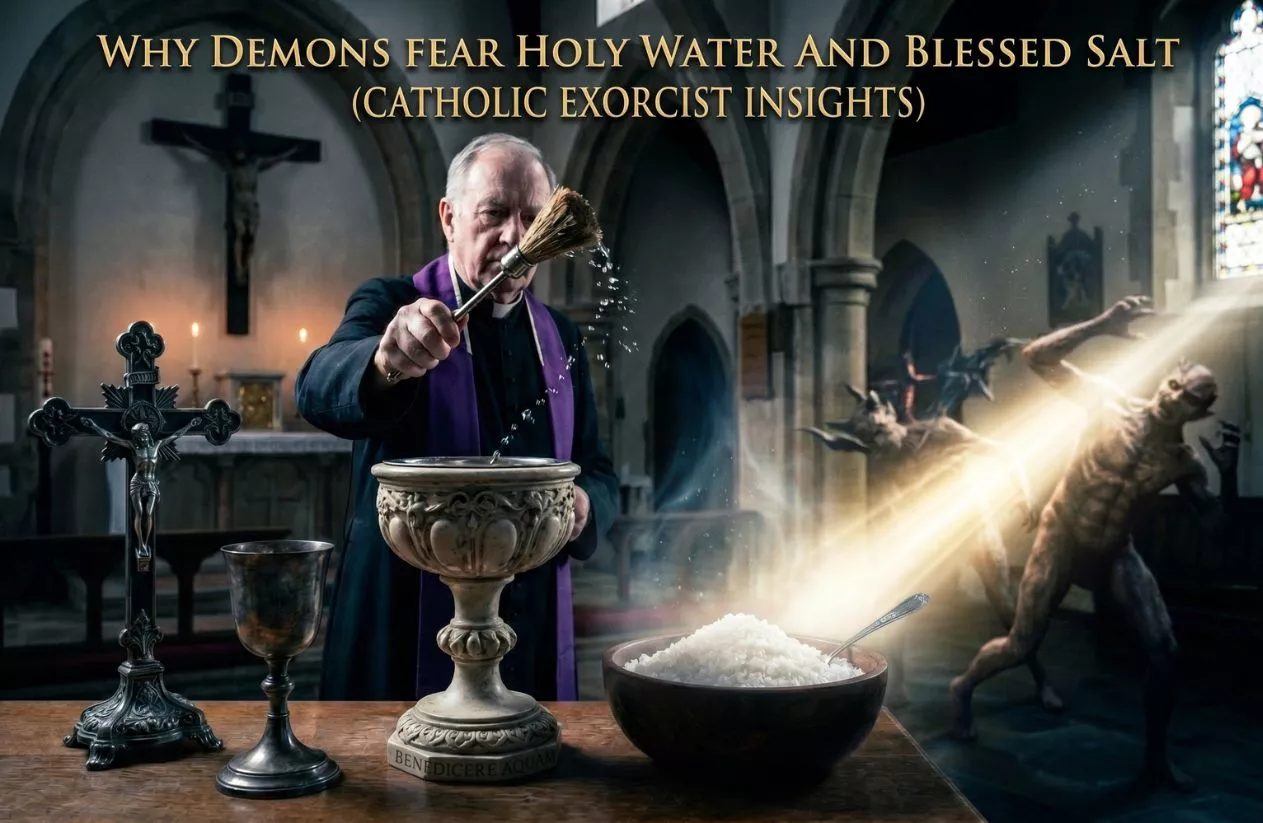
Hollywood portrays holy water as spiritual acid, but real-world exorcisms reveal a deeper, non-cinematic reality: demons truly terrify at its presence. Secular critics dismiss this as medieval superstition, while many Protestants view blessed objects as unscriptural, pagan talismans. Both perspectives fail to understand how God uses material creation.
Holy water and blessed salt possess no magical properties or intrinsic energy. They are completely inert on their own. Their power derives entirely from the sovereign authority of Jesus Christ, channeled directly through the institutional, intercessory prayers of the Catholic Church.
When used with genuine faith, these ordinary elements become targeted instruments of divine protection, turning the Church’s continuous prayer into a tangible shield against demonic influence.
Key Takeaways for the Faithful
To ensure you are using these spiritual weapons effectively, always keep these three core principles in mind:
- Matter Follows Faith: Sacramentals do not contain intrinsic magic; they channel the continuous, institutional prayer of the Church based on your disposition.
- Live a Sacramental Life: Prioritize frequent Confession and the Holy Eucharist. External tools are useless without internal grace.
- Focus on the Creator, Not the Tool: Always direct your prayers of thanksgiving to Jesus Christ, who holds ultimate authority over all creation.
Table of Contents
What Are Catholic Sacramentals in Spiritual Warfare?

Defining Sacramentals: The Church’s Definition
According to paragraph 1667 of the Catechism of the Catholic Church, sacramentals are “sacred signs instituted by the Church. They prepare men to receive the fruit of the sacraments and sanctify different occasions of life.” In spiritual warfare, they function as spiritual weapons that repel demonic influence, shield households from oppression, and dispose the soul to divine grace.
Sacraments vs. Sacramentals: Knowing the Difference
To use these tools effectively, you must understand how they differ from the seven Sacraments. Jesus Christ Himself instituted the Sacraments—such as Baptism, Confession, and the Holy Eucharist—to confer sanctifying grace directly into the soul, provided the recipient places no obstacle in the way.
Conversely, the Church instituted sacramentals. They do not confer the Holy Spirit or sanctifying grace on their own. Instead, by the power and authority Christ gave to His Church, sacramentals arouse holy devotion in the believer.
They channel actual grace and divine protection through the continuous, collective intercession of the Mystical Body of Christ.
How Sacramentals Channel Church Intercession
When you sprinkle holy water or use blessed salt, you are not acting alone; you are invoking the full weight of the Church’s institutional prayer against the forces of darkness.
The power lies in this collective intercession, making these elements safe yet highly effective tools for laypeople seeking everyday spiritual protection.
The Mechanics of Power: Why Sacramentals Aren’t “Magic”
The Theological Reality: Ex Opere Operantis Ecclesiae
Superstition and magic rely on the delusion that a specific formula or physical object holds intrinsic, occult power to manipulate reality. Catholic sacramentals operate on the exact opposite principle. The Church explains the spiritual efficacy of these objects through a precise theological concept: ex opere operantis Ecclesiae, which translates to “from the action of the Church operating.”
Unlike the Sacraments, which work ex opere operato (by the very fact of the action being performed through Christ’s direct institution), a sacramental derives its strength from the holiness, authority, and continuous intercession of the Mystical Body of Christ.
How a Priestly Blessing Transforms Ordinary Elements
When a validly ordained priest pronounces a blessing over water or salt, he is not performing an esoteric ritual. He is acting as an official representative of Christ’s Church, exercising the spiritual keys and binding authority given to the Apostles.
Through this blessing, the priest dedicates the material element exclusively to a holy purpose. The water or salt becomes a physical vehicle linked to the continuous, institutional prayer of the Church. When a layperson uses these blessed elements with faith, the Holy Spirit honors the Church’s original prayer of blessing, activating divine protection over the person or place.
The Demonic Perspective: What Evil Spirits Actually See
To understand why sacramentals work, you must look at them through the lens of angelic intelligence. Demons are purely spiritual beings with vast intellects.
They are entirely indifferent to the H2O molecule or the sodium chloride crystals themselves; natural matter cannot hurt a fallen angel.
What terrifies a demon is the supernatural reality attached to the object. When faced with holy water or blessed salt, evil spirits perceive the sovereign authority of Jesus Christ and the presence of the Holy Spirit acting through the Church’s mandate. The element serves as a physical reminder of their defeat on the Cross, forcing them to submit not to the physical substance, but to the divine authority backing it.
Why Demons Fear Holy Water: The Insights of Fr. Gabriele Amorth

The Expert Witness: Rome’s Chief Exorcist
To understand the practical impact of holy water on the demonic, we can look to the real-world experience of Father Gabriele Amorth. As the legendary Chief Exorcist of Rome for over three decades, Fr. Amorth conducted tens of thousands of exorcisms.
In his classic memoirs, including An Exorcist Tells His Story, he documented that among all the tools provided by the Church, holy water is consistently one of the most immediate and intensely loathed by evil spirits during a deliverance session.
The Theological Trigger: A Reminder of Baptism
Fr. Amorth explained that the acute terror demons manifest when sprinkled with holy water is not random; it triggers a profound spiritual memory. Holy water serves as a tangible reminder of Baptism.
Baptism is the foundational moment when a soul is legally and spiritually rescued from the dominion of darkness, washed clean of original sin, and claimed entirely for Jesus Christ.
When a demon encounters holy water, it is forced to confront the specific moment human beings were granted a status they can never attain: adoption as sons and daughters of God. The water reminds them of their utter defeat on the Cross and their loss of legal ownership over the human soul.
Practical Use: Deploying Holy Water in the Home
Because of this efficacy, Fr. Amorth strongly advocated for laypeople to integrate holy water into their daily lives rather than viewing it as a tool exclusive to priests. You do not need an extraordinary manifestation of evil to use it.
- Sanctifying the Home: Regularly walk through your living spaces and bedrooms, sprinkling holy water while praying for peace and the expulsion of any lingering spiritual oppression, anxiety, or discord.
- Protecting Children: Exorcists frequently recommend that parents use holy water to trace the Sign of the Cross on their children’s foreheads before sleep. This acts as a protective shield, warding off nightmares, spiritual disturbances, and nighttime anxieties.
- Personal Devotion: Keep a small font near your entryway or bed, blessing yourself during times of sudden temptation or mental distress to immediately realign your mind with your baptismal identity.
The Hidden Weapon: The Power of Blessed and Exorcised Salt

The Scriptural Roots of Spiritual Salt
While holy water is widely recognized, blessed and exorcised salt remains a hidden weapon in the Church’s spiritual arsenal. The use of salt as an instrument of divine purification is deeply rooted in Sacred Scripture.
In the Old Testament, the prophet Elisha was called to heal a contaminated, death-yielding water source in Jericho. Under divine instruction, he cast salt into the spring, declaring, “Thus says the Lord: I have healed this water; no more death or miscarriage shall come from it” (2 Kings 2:19-22).
Later, in the Gospels, Jesus Christ elevated this imagery when He looked at His disciples and commanded them to be the “salt of the earth” (Matthew 5:13). Salt was not a mere seasoning to the ancient world; it was a primary agent of life, preservation, and spiritual covenant.
The Insights of Fr. Chad Ripperger
Modern Catholic exorcist Father Chad Ripperger has written and lectured extensively on the psychological and spiritual dynamics of deliverance. In his teachings on spiritual warfare, Fr. Ripperger emphasizes that sacramentals are heavily underutilized by the laity because people often fail to understand how the specific, natural properties of an element mirror its supernatural effects when blessed.
According to Fr. Ripperger, when a priest uses the traditional prayers from the Rituale Romanum to exorcise and bless salt, the element is infused with a specific, targeted efficacy aimed at driving out demonic infestation and breaking specific generational ties or localized afflictions.
The Dual Purpose: Preservation and Protection
Exorcists consistently point to two primary spiritual functions of blessed salt that laypeople can apply directly to their homes:
- Purification and Preservation: In the natural world, salt prevents meat from rotting by killing off harmful bacteria. Supernaturally, blessed salt does the same: it halts spiritual rot and decay. It purifies an environment of negative, oppressive demonic attachments and preserves the home in a state of grace, making the atmosphere highly inhospitable to dark forces.
- The Protective Boundary Line: Fallen angels possess a keen sense of order and legal boundaries. Exorcists frequently document that demons experience an extreme aversion to crossing physical lines marked by blessed salt. By placing a thin, continuous line of blessed salt across the thresholds of your exterior doors and window sills, you are establishing a symbolic and spiritually binding boundary. It serves as a visual and spiritual notice that the property has been claimed for Christ, acting as a barrier that the enemy loathes to breach.
Related Article: Do Catholics Worship Saints? A Simple Breakdown for Searching Christians
How to Correctly Use Holy Water and Blessed Salt at Home

A Practical Blueprint for Spiritual Defense
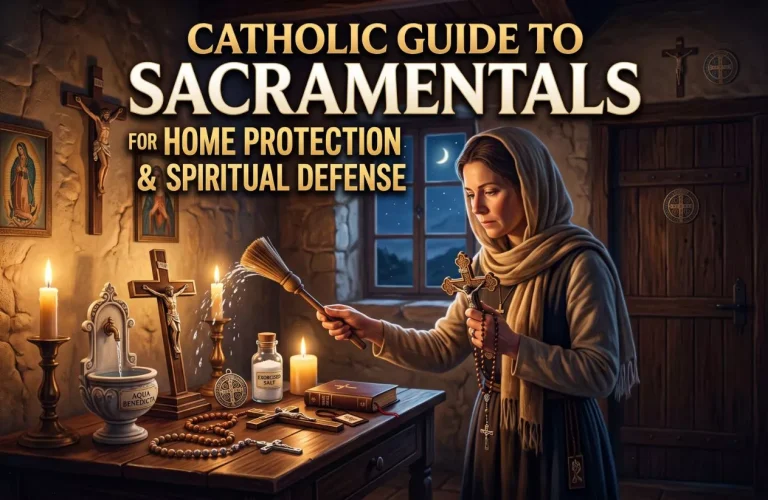
Deploying sacramentals in your home does not require complex rituals or dramatic gestures. Because laypeople hold legitimate spiritual authority over their own bodies and domestic households, you can safely and effectively use these tools to protect your living spaces.
Here is a structured, step-by-step breakdown of how to integrate holy water and blessed salt into your family’s spiritual defense system.
1. Obtain True Sacramentals
The first step is ensuring your items are authentic. Never purchase “holy water” or “blessed salt” online from commercial websites or unverified storefronts. Simony—the buying or selling of spiritual things—is a grave sin, and commercial items lack the proper ecclesiastical blessing.
- Where to go: Visit your local Catholic parish. Most churches have a large communal holy water tank where parishioners can fill up personal bottles for free.
- The Priest’s Blessing: Bring a container of regular water and a container of pure, unflavored salt (such as sea salt or kosher salt) to a validly ordained priest. Politely ask him to bless them. For spiritual warfare purposes, it is highly recommended to ask the priest to use the traditional prayers of blessing or the explicit prayers of exorcism found in the older Rituale Romanum (Roman Ritual), which contain specific commands to drive away evil spirits.
2. Establish a Spiritual Perimeter
Once you have your sacramentals, you can use them to actively secure and seal your living spaces from negative spiritual influences or oppression.
- Sprinkling Holy Water: Walk through each room of your home. Sprinkle holy water into the corners of the rooms, or on beds and furniture, while praying a simple deprecatory prayer, such as: “Lord Jesus, cleanse this room of all evil, and let Your holy angels dwell here to protect my family.”
- Sealing the Openings: Take your blessed salt and place a small, thin, continuous line along the floor thresholds of your front and back doors, as well as on window sills. This physical act establishes a spiritual boundary line around your domestic church, signaling to demonic forces that they have no legal right to enter or disturb the peace of your household.
3. Integrate Into Daily Routines
Spiritual warfare is not a one-time event; it requires ongoing consistency. Treating sacramentals as part of your daily spiritual hygiene builds long-term immunity against temptation and anxiety.
- Install Home Fonts: Place a small holy water font near your main entryway or right beside your bedroom doors.
- Daily Blessings: Make it a habit to dip your fingers into the holy water and make the Sign of the Cross whenever you leave the house or return home.
- Targeted Relief: Keep holy water within arm’s reach of your bed. If you or your children suffer from sudden midnight anxieties, terrifying nightmares, unexplained sleeplessness, or intense moments of spiritual temptation, immediately bless yourself or your children to quiet the mind and reclaim Christ’s peace.
Conclusion: Trusting in God, Not the Object
The Spiritual Limits of Blessed Objects
It is vital to remember that holy water and blessed salt are not magical protective shields that operate independently of your relationship with God. They are spiritual tools designed to point you directly back to a life of active faith, consistent prayer, and the reception of the Sacraments.
You cannot treat these items like pagan good-luck charms. A home drenched in holy water will not protect a soul that intentionally and unrepentantly remains in a state of mortal sin. Sacramentals require your cooperation with divine grace; they lose their practical efficacy if you are simultaneously inviting the enemy into your life through serious, unconfessed sin. True safety begins with a clean conscience and a soul aligned with God through the Sacrament of Penance.
Standing Firm in Christ’s Victory
When deploying catholic sacramentals spiritual warfare requires a mindset of profound peace, not fear or paranoia. These elements are gentle, ancient treasures of the Church given to reassure us of Christ’s definitive victory on the Cross.
Fallen angels want you to feel isolated, overwhelmed, and defenseless in your daily trials. But through the authority given to the Church, Jesus has provided every necessary weapon for His flock to live in deep peace and complete spiritual safety. Embrace these physical gifts with strong faith, keep your eyes fixed on the Savior, and rest secure in the knowledge that the forces of darkness are already defeated.
Related Article: The Saint Benedict Medal: The History and Meaning
Frequently Asked Questions
Can laypeople use exorcised salt and holy water without a priest?
Yes. While only a priest can perform the ritual to bless or exorcise these elements, any layperson can safely and legally use them. As a baptized Catholic, you hold legitimate spiritual authority over your own body, your dependent children, and your domestic home. Using sacramentals within your proper jurisdiction to protect your family is highly encouraged by modern exorcists.
Is “exorcised salt” different from regular blessed salt?
Yes, the difference lies in the specific prayers used by the priest. Standard blessed salt utilizes a prayer of blessing for general use and safety. Exorcised salt is blessed using the traditional Rituale Romanum (Roman Ritual), which includes specific, binding commands driving away evil spirits and breaking demonic infestation. Both are effective, but exorcised salt is specifically tailored for intense spiritual warfare.
What should I do with holy water or blessed salt if I need to dispose of it?
Because sacramentals are officially blessed and dedicated to holy use, they must never be thrown into the regular trash or poured down a standard drain connected to a sewer line. If holy water spoils, pour it directly into the natural earth where people will not step on it, or into a church sacrarium (a special sacristy sink that drains directly into the ground). Blessed salt should likewise be dissolved in water and poured into the earth, or buried directly in the ground.
Can I use blessed salt in my food or cooking?
Yes, absolutely. Exorcists frequently recommend consuming small amounts of blessed or exorcised salt in your daily food, especially if an individual is suffering from internal spiritual trials, unexplainable physical ailments, or persistent psychological oppressions. It serves as a continuous physical vehicle of the Church’s prayer for healing and purification inside the body.
Why do some Christian denominations reject Catholic sacramentals?
Many Protestant denominations reject sacramentals due to the theological concept of Sola Scriptura (Scripture alone) and a misunderstanding of how Catholics use these objects. They often view blessed items as superstitious talismans that detract from the immediate mediation of Jesus Christ. Catholic theology clarifies that sacramentals hold no power of their own; they simply channel Christ’s definitive victory through the physical world, mirroring how God used physical objects for healing and deliverance throughout Sacred Scripture.