Breaking Generational Curses: A Catholic Theological and Practical Guide
Quick Summary: In Catholic theology, breaking generational curses does not mean inheriting the guilt of an ancestor’s personal sin, as Ezekiel 18 clarifies that each soul is responsible for its own transgressions. However, families can experience the spiritual, psychological, and behavioral consequences of ancestral sin—often referred to as spiritual oppression or generational trauma. Catholics break these negative ancestral patterns not through superstitious rituals or non-Christian smudging, but through the Sacraments (Confession and the Eucharist), Holy Mass intentions for ancestors, healing of family trees, and living in a state of sanctifying grace.
Many people find themselves locked in repetitive, exhausting battles against destructive family patterns. Whether dealing with sudden cycles of addiction, severe emotional heaviness, recurring marriage breakdowns, or unexplainable spiritual warfare that seems to trace back through generations, it is easy to wonder if an unseen force is operating within the family tree.
Outside the Church, these persistent burdens are frequently attributed to bloodline debts, ancestral hexes, or inescapable fate.
However, approaching breaking generational curses catholic teaching requires stripping away superstitious panic and turning toward the clear light of Sacred Scripture and Church tradition.
Catholic demonology and pastoral theology acknowledge that while the temporal consequences and spiritual vulnerabilities of an ancestor’s grave sins can ripple down to descendants, no believer is helpless.
Through the spiritual power of Holy Mass, regular Sacramental Confession, and the authority of Jesus Christ, every dark lineage pattern can be permanently severed, restoring peace and grace to the household.
Table of Contents
What is a Generational Curse? Understanding the Concept
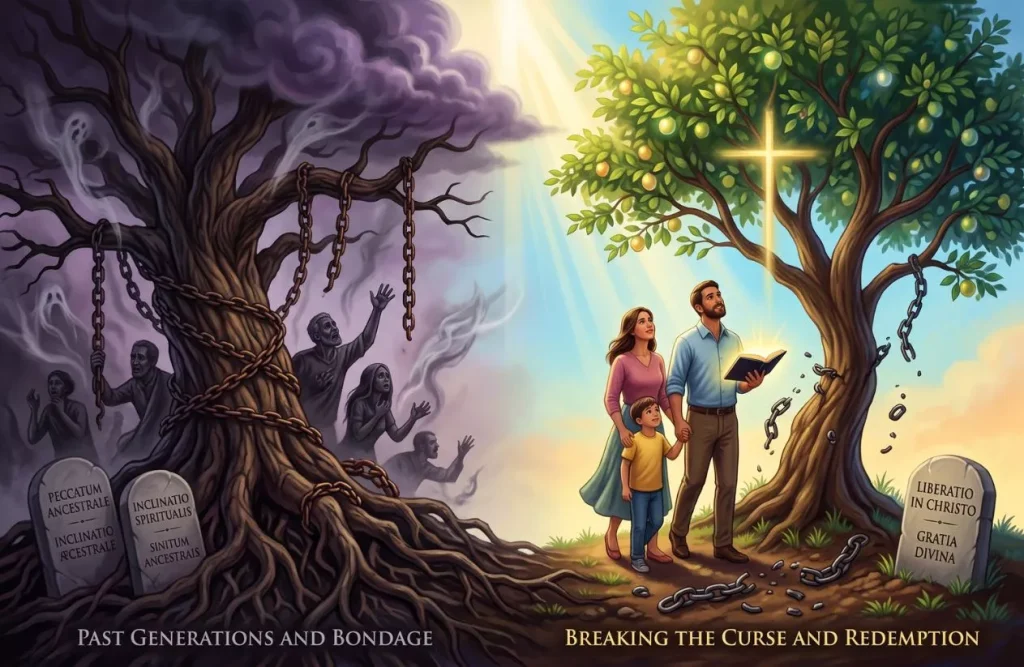
To address family-line struggles effectively, we must first establish clear, nuanced definitions. The phrase “generational curse” is frequently used in spiritual warfare discussions, yet it is often misunderstood or conflated with superstitious concepts. Understanding what is a generational curse requires separating authentic spiritual realities from both fatalistic folklore and purely secular psychological models.
Defining the Reality: Spiritual Vulnerability vs. Generational Trauma
In classical Christian demonology and Catholic pastoral theology, a generational curse refers to a spiritual vulnerability, inclination, or ongoing oppression that affects a family line as a consequence of grave, unrepented spiritual transgressions or diabolical openings in the ancestry. It is not an arbitrary or inescapable magical spell, but rather a spiritual vulnerability where dark influences exploit open doors across generations.
Church deliverance experts and exorcists note that these generational spiritual openings typically originate through specific circumstances:
- Occult and Esoteric Practices in the Family: A primary origin of generational spiritual affliction occurs when a family line has a history of active occult involvement. This includes ancestors who practiced witchcraft, sorcery, divination, or acted as traditional “faith healers” (albularyo, spiritists, or folk healers using occult incantations). Even when framed as benevolent or white magic, engaging with spirits outside of God establishes a formal spiritual opening, giving demonic entities legal grounds to torment that ancestor and target their descendants.
- Targeted Curses and Witchcraft: A generational curse can also stem from a deliberate curse, hex, or spell cast by a witch or practitioner of the occult against an ancestor. If an ancestor lacked spiritual protection—or if the curse was permitted through divine permission—demonic entities are attached to that bloodline to torment the original target and continue harassing subsequent generations down the family tree.
- Grave, Systemic Ancestral Sin: Severe moral transgressions such as murder, blasphemy, idolatry, or Freemasonry strip a household of spiritual protection, creating severe spiritual wounds that leave descendants vulnerable to diabolical harassment.
The Parallel of Generational Trauma
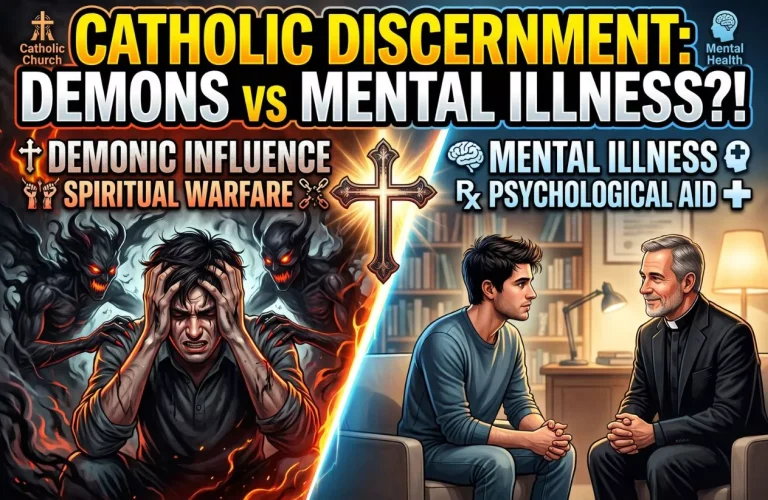
Modern secular psychology recognizes a natural parallel phenomenon known as generational trauma (or intergenerational trauma). Psychological research demonstrates how severe abuse, addiction, emotional distress, and destructive behavioral patterns are passed down through learned environmental habits, dysfunctional coping mechanisms, and even epigenetic shifts.
Catholic theology does not reject these psychological findings. Instead, it recognizes that spiritual and psychological forces often operate hand-in-hand:
- Generational Trauma (Pathology): The natural, psychological, behavioral, and biological transmission of dysfunction from parent to child (e.g., an alcoholic parent modeling destructive behaviors to offspring).
- Generational Oppression (Spiritual): The extraordinary spiritual influence wherein demonic entities exploit those exact natural psychological wounds, familial habits, and ancestral occult openings to maintain a foothold across generations.
Are Curses Real? Distinguishing Diabolical Action from Natural Dysfunction
When believers confront persistent household difficulties, a critical question arises: are curses real, or are these struggles simply the product of bad luck and human flaw?
Catholic theology affirms that curses are real in the sense that human beings can misuse their free will to invoke evil or engage in grave sins—such as occult practices, witchcraft, or deep malice—that invite diabolical activity into a household.
However, the Church maintains a strict distinction between three very different types of family burdens:
- Active Diabolical Curses: Rare situations where an ancestor deliberately engaged in occult rituals, pacts, or heavy mortal sin, giving dark forces legal or spiritual grounds to torment the household.
- Structural Family Sins: Systemic moral failures within a household—such as habitual deceit, greed, or marital infidelity—that normalize sinful behavior for rising generations.
- Ordinary Psychological Dysfunction: Natural mental health conditions, neurological disorders, or emotional traumas that require professional medical care rather than spiritual deliverance.
Catholic Theology vs. Superstitious Fatalism
A dangerous mistake in addressing generational curses is adopting a fatalistic, superstitious mindset. Certain non-Catholic traditions or popular media suggest that a generational curse operates like an inescapable magical spell—a force that dooms descendants regardless of their faith or moral life.
The Catholic perspective firmly rejects this superstition:
| Superstitious “Family Hex” View | Authentic Catholic Theological View |
| Claims ancestors’ sins force God or fate to condemn innocent descendants. | Affirms each soul possesses free will and is judged solely on its own moral choices. |
| Views curses as unbreakable magical spells that operate automatically. | Teaches that all demonic influence is strictly limited by God’s providence and subject to Christ’s authority. |
| Relies on superstitious rituals, smudging, or paid “cleansings.” | Relies exclusively on the Sacraments, prayer, moral repentance, and living in a state of grace. |
| Creates fear, paralysis, and a sense of helplessness. | Instills hope, spiritual strength, and confidence in the victory of the Cross. |
Through Baptism and the Sacramental life of the Church, every Christian is given the spiritual armor necessary to overcome ancestral inclinations. A family history may present specific spiritual hurdles, but in Christ, no believer is ever bound to the sins of their past.
Generational Curses in the Bible: What Scripture Actually Teaches
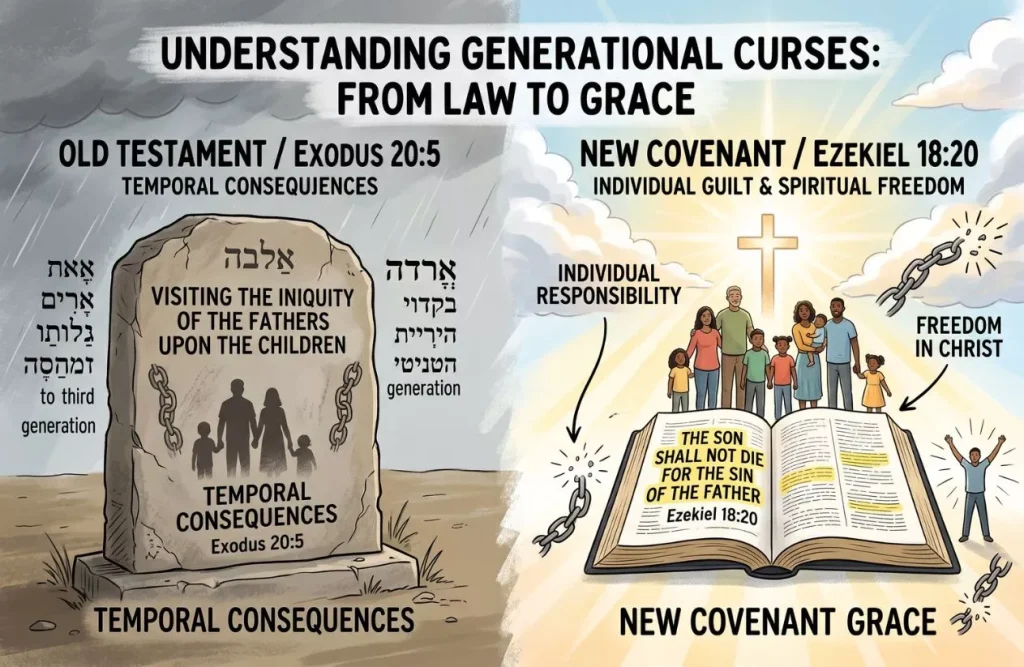
To properly evaluate this topic, we must examine what Sacred Scripture explicitly says about family-line afflictions. Discussions around generational curses in the bible frequently pull isolated verses out of context, leading to confusion regarding God’s justice and mercy. A sound biblical hermeneutic requires reading the Old Testament through the lens of the New Covenant established by Jesus Christ.
The Old Testament Context: Exodus and the Ripple Effect of Sin
When people search for scriptures on generational curses, they almost always point to key passages in the Torah where God addresses the consequences of idolatry and rebellion.
“You shall not bow down to them or serve them; for I the Lord your God am a jealous God, visiting the iniquity of the fathers upon the children to the third and the fourth generation of those who hate me, but showing steadfast love to thousands of those who love me and keep my commandments.” — Exodus 20:5–6 (cf. Deuteronomy 5:9–10, Numbers 14:18)
In ancient Near Eastern culture, family identity was intensely corporate. A household functioned as a single moral unit. When the head of a household engaged in grave idolatry or occult practices, the entire family was drawn into that environment.
Notice the critical qualifier in Exodus 20:5: the consequences fall upon the third and fourth generation “of those who hate me.” The passage describes a continuing habit of sin passed down through environment and spiritual influence, not an arbitrary divine punishment inflicted on innocent children.
Furthermore, Scripture places immediate boundaries on this warning by contrasting the four generations of consequence with the thousands of generations of divine mercy reserved for those who love God.
The Theological Turning Point: Ezekiel 18 and Personal Responsibility
Any complete study of biblical generational curses must account for the explicit theological clarification provided by the Prophet Ezekiel. During the Babylonian exile, the Israelites quoted a popular proverb to shift blame for their suffering onto their ancestors: “The fathers have eaten sour grapes, and the children’s teeth are set on edge” (Ezekiel 18:2).
God directly rejected this fatalistic proverb, establishing an explicit principle of individual moral accountability:
“The soul that sins shall die. The son shall not suffer for the iniquity of the father, nor the father suffer for the iniquity of the son; the righteousness of the righteous shall be upon himself, and the wickedness of the wicked shall be upon himself.” — Ezekiel 18:20
Ezekiel 18 makes it dogmatically clear that God never charges a child with the moral guilt of a parent’s sin. The New Covenant in Jesus Christ fulfills and seals this truth. On the Cross, Christ broke the legal power of sin, ensuring that no believer is condemned by the personal moral failures of their bloodline.
Moral Guilt vs. Temporal Consequences: The Crucial Distinction
How do we reconcile Exodus 20 with Ezekiel 18? Catholic theology resolves this apparent tension by distinguishing between moral guilt and temporal consequences:
- Moral Guilt (Non-Inheritable): Guilt is the personal spiritual stain resulting from a free-will choice to commit sin. Moral guilt resides exclusively in the soul of the person who committed the act. You cannot inherit the moral guilt of your father, grandfather, or ancestors.
- Temporal Consequences & Spiritual Vulnerabilities (Inheritable): While guilt cannot be inherited, the physical, psychological, social, and spiritual aftereffects of sin certainly ripple through a family line.
If a parent squanders a family fortune through gambling or addiction, the children do not inherit the parent’s moral guilt, but they directly inherit the poverty and environmental trauma resulting from those choices.
Similarly, when ancestors engage in grave sins—such as murder, occult involvement, abuse, or blasphemy—they strip their household of spiritual protection, leaving their descendants exposed to emotional wounds, learned moral weaknesses, and demonic exploitation.
Recognizing these spiritual vulnerabilities is not a lack of faith; it is the first step toward bringing those specific family wounds under the healing authority of Jesus Christ.
Key Scriptures on Generational Curses and Spiritual Freedom
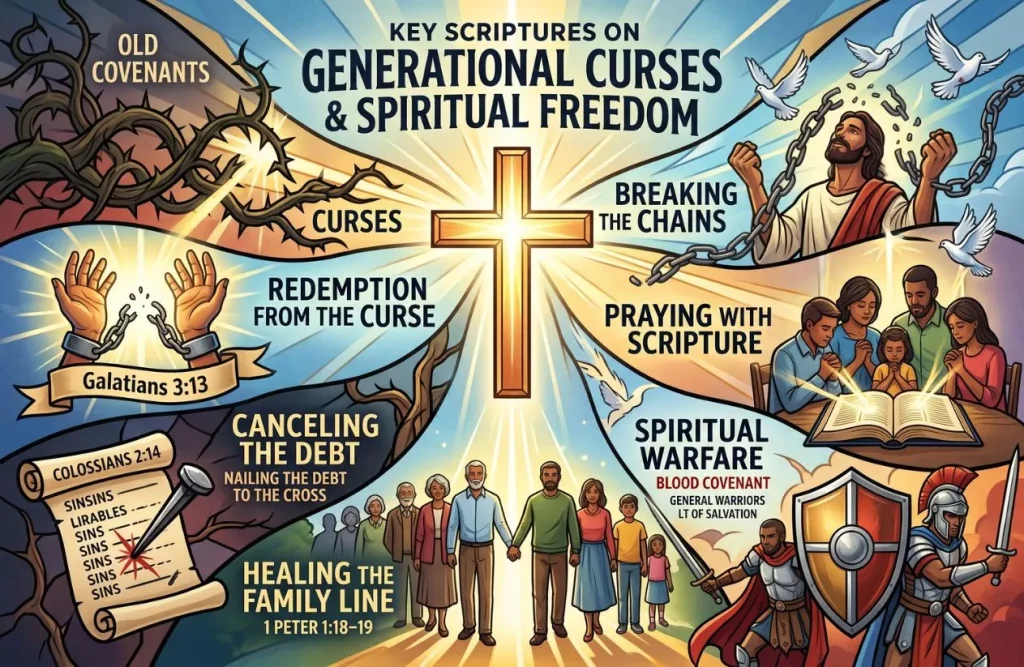
Standing on the Word of God is essential when confronting any form of spiritual heavy-heartedness or family-line oppression. Sacred Scripture is not merely an informational text; it is living, active, and sharp—a primary weapon in Catholic spiritual warfare.
When searching for scriptures on generational curses, believers must look beyond the warnings of the Old Law and fix their eyes on the promises of the New Covenant, where the victory over dark lineages is fully realized in Jesus Christ.
Below is a categorized breakdown of essential breaking generational curses bible verses that affirm the absolute authority of the Savior over every ancestral bond.
Key Scriptures for Divine Deliverance and Freedom
1. Redemption from the Curse: Galatians 3:13
“Christ redeemed us from the curse of the law by becoming a curse for us—for it is written, ‘Cursed is everyone who is hanged on a tree.'” — Galatians 3:13
- Theological Insight: Paul explains that human beings were once bound under the spiritual weight and penalty of the broken Law. By offering Himself on the Cross, Jesus absorbed the entire weight of human condemnation. Because Christ took the ultimate curse upon Himself, no believer who abides in Him remains under a legal sentence of spiritual bondage.
2. Canceling the Legal Record of Debt: Colossians 2:13–15
“And you, who were dead in your trespasses and the uncircumcision of your flesh, God made alive together with him, having forgiven us all our trespasses, by canceling the record of debt that stood against us with its legal demands. This he set aside, nailing it to the cross. He disarmed the rulers and authorities and put them to open shame, by triumphing over them in him.” — Colossians 2:13–15
- Theological Insight: Demonic entities operating in a family tree often rely on “legal grounds”—spiritual rights gained when ancestors engaged in mortal sin, occult pacts, or idolatry. St. Paul uses legal terminology to declare that Christ completely wiped out this certificate of debt. By nailing it to the Cross, Jesus disarmed the demonic principalities, stripping them of any lawful claim over those who belong to Him.
3. Ransomed from Inherited Futility: 1 Peter 1:18–19
“Knowing that you were ransomed from the futile ways inherited from your forefathers, not with perishable things such as silver or gold, but with the precious blood of Christ, like that of a lamb without blemish or spot.” — 1 Peter 1:18–19
- Theological Insight: St. Peter directly addresses the reality of ancestral inheritance, explicitly calling them “futile ways inherited from your forefathers.” Whether these inherited patterns consist of moral weakness, false worship, or spiritual oppression, Peter reminds us that the ransom price has already been paid in full. The Precious Blood of Jesus breaks the binding power of inherited futility.
How to Pray with These Verses During Holy Hours and Family Prayer
Knowing these passages intellectually is only the first step; bringing them into your active prayer life transforms them into spiritual armor. Here is how lay Catholics can practically pray with these scriptures to seek peace in their household:
- Lectio Divina in Adoration: Take these passages into a Holy Hour before the Blessed Sacrament. Read a passage slowly (e.g., Colossians 2:13–15), meditate on Christ nailing your specific family debt to the Cross, and ask Him to reveal His total victory over your bloodline.
- Scriptural Declarations of Faith: During daily family prayers or the Holy Rosary, speak these promises as acts of confidence in God. For instance, pray: “Lord Jesus, I stand upon 1 Peter 1:18–19. I claim that my household is ransomed from the futile ways of our ancestors by Your Precious Blood.”
- Rooting Rosary Intentions in the Word: Offer specific decades of the Rosary (such as the Sorrowful Mysteries) for the healing of your family tree, offering the Blood of Jesus poured out in the Scriptures to wash over specific living and deceased relatives.
The Catholic Perspective: Sins of Fathers vs. Inherited Guilt
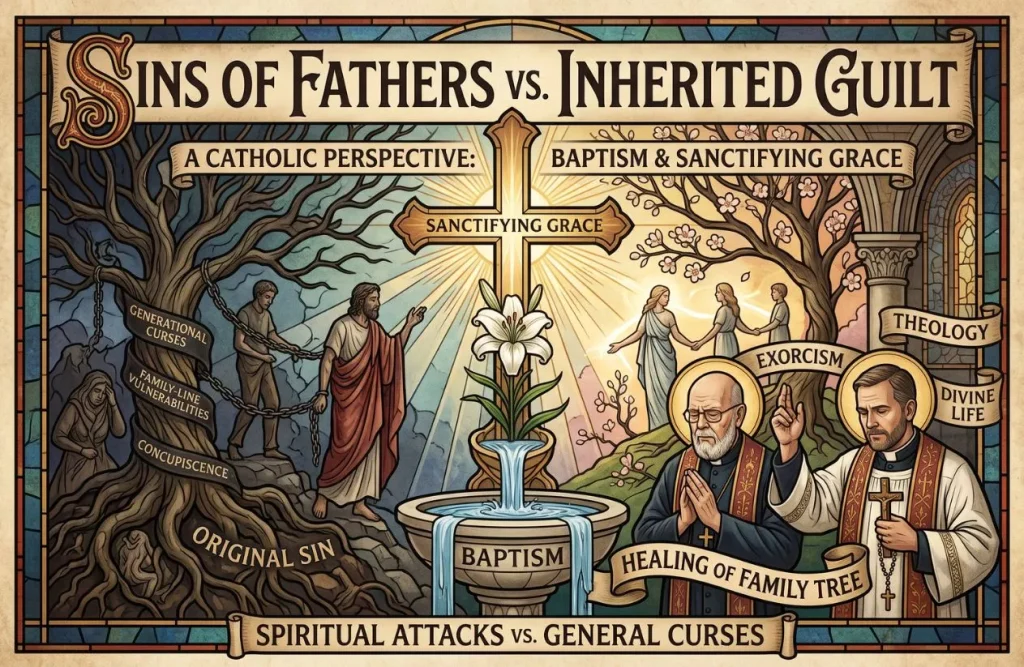
Prominent Catholic exorcists and theologians—such as the late Fr. Gabriele Amorth and Fr. Chad Ripperger—frequently address household afflictions while maintaining strict alignment with Catholic dogma.
To avoid falling into Protestant “ancestral bond” errors or New Age superstitions, Catholic theology maintains a clear boundary between personal moral guilt and inherited spiritual vulnerability.
Exorcists emphasize that while a person never inherits the guilt of an ancestor’s sin, demonic entities can legally exploit the wounds, habits, and openings left by an ancestor’s unrepented transgressions. The spiritual authority of parents and head of households gives them a unique capacity to protect—or expose—their family line.
When an ancestor abuses that authority through grave sin, occultism, or explicit curses, the household loses spiritual protection, leaving descendants exposed to demonic harassment.
The Role of Baptism: Regeneration and Residual Vulnerability
A common theological question arises: If Baptism cleanses us completely, how can a baptized Catholic still experience a generational curse?
Holy Baptism accomplishes profound spiritual regeneration:
- Washes Away Original Sin: Erases the inherited guilt of Adam and restores sanctifying grace to the soul.
- Incorruptible Mark: Seals the believer as a child of God and an heir to the Kingdom.
- Remits All Punishment: Clears all eternal guilt due to sin up to that moment.
However, Baptism does not strip away the physical, psychological, or historical reality of human nature. It leaves behind concupiscence—the natural inclination toward sin—as well as physical illnesses, psychological traumas, and inherited family dynamics.
If an ancestor opened a door to demonic activity, Baptism gives the soul the divine grace and authority needed to fight, but it does not automatically close every generational door that was previously left wide open.
Just as a baptized person can still inherit a biological disposition toward alcoholism or heart disease, they can inherit a spiritual environment heavily targeted by dark forces. Closing these remaining footholds requires active, intentional cooperation with grace through prayer, deliverance, and the Sacraments.
Specific Spiritual Attacks vs. General Curses
Proper spiritual discernment requires distinguishing between targeted diabolical activity and the broad general curses or environmental darkness that affect the modern world.
                    ┌──────────────────────────────────────────┐
                    │       Spiritual Affliction Origin        │
                    └────────────────────┬─────────────────────┘
                                         │
                    ┌────────────────────┴─────────────────────┐
                    │                                          │
        ┌───────────┴───────────┐                  ┌───────────┴───────────┐
        │   Specific Attack     │                  │  General Darkness     │
        └───────────┬───────────┘                  └───────────┬───────────┘
                    │                                          │
      ┌─────────────┴─────────────┐              ┌─────────────┴─────────────┐
      │ Targeted diabolical door  │              │ Diffuse societal decay    │
      │ Specific ancestral sins   │              │ Fallen world atmosphere   │
      │ Direct family oppression  │              │ Standard temptation       │
      └───────────────────────────┘              └───────────────────────────┘
- Specific Spiritual Attacks: These stem from identifiable legal rights gained by evil spirits through targeted family actions. Examples include ancestral involvement in Freemasonry, explicit generational curses spoken by parents over children, occult practices, or horrific unconfessed blood crimes. The resulting diabolical pressure is localized, repeating specific patterns (such as unnatural marriagelessness, sudden violent deaths, or recurring extreme spiritual oppression) within a single bloodline.
- General Curses and Environmental Darkness: Broad spiritual heaviness resulting from living in a fallen world steeped in secularism, institutional sin, and widespread moral decay. These are non-targeted influences that affect society as a whole rather than a specific family line.
Understanding this distinction prevents unnecessary spiritual anxiety. Not every struggle in life is a targeted generational curse; many burdens are simply the standard temptations and environmental noise of a fallen world, which are easily managed through routine Christian spiritual discipline.
How to Break Generational Curses as a Catholic: Sacramental & Spiritual Steps
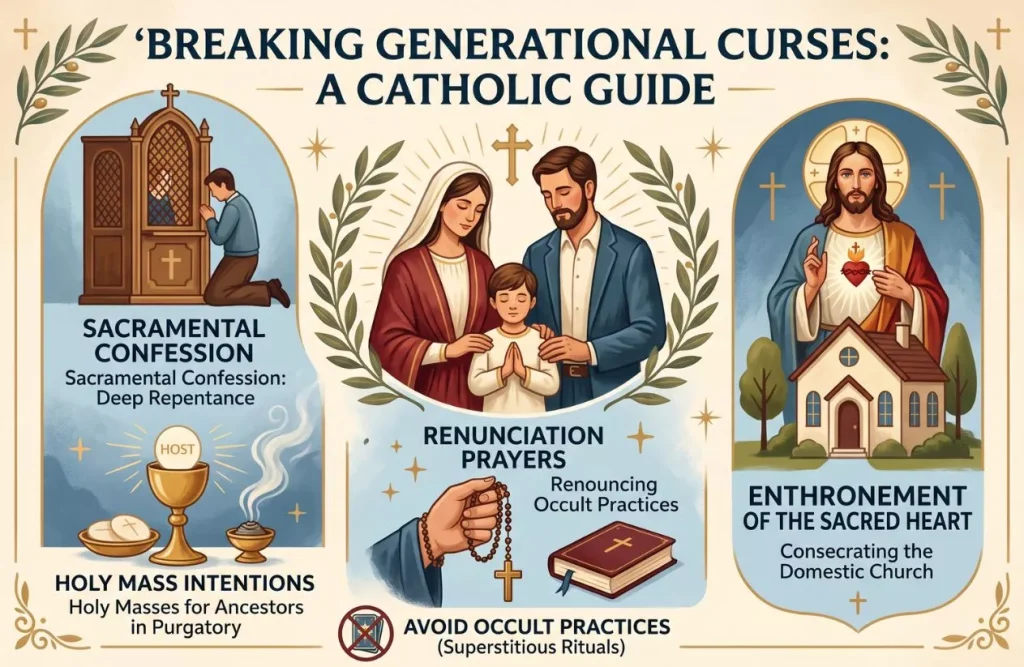
When discerning how to break generational curses, Catholics must avoid the temptation to seek quick fixes, esoteric rituals, or sensationalized deliverance prayers.
The Catholic Church does not break dark spiritual bonds through superstitious formulas, but through the objective authority of Jesus Christ communicated via the Sacraments, moral conversion, and lawful spiritual authority within the household.
If you suspect that your family line is suffering from ancestral spiritual openings, follow this step-by-step, Church-approved framework to restore peace, grace, and divine protection to your bloodline.
Step-by-Step Catholic Deliverance Framework
- Sincere Sacramental Confession
Prerequisite: Severing Demonic Legal Grounds: Demonic entities maintain footholds primarily through unconfessed mortal sin. Making a thorough, life-review Confession strips evil spirits of any legal or spiritual claims over your life. When a priest pronounces absolution, your soul is restored to a state of sanctifying grace, instantly re-establishing your spiritual armor. - Request Mass Intentions for Deceased Ancestors
Offering the Supreme Sacrifice for Family Line Healing : The most powerful spiritual action a Catholic can take for their bloodline is to offer Holy Mass for the souls of deceased ancestors. Request Holy Mass intentions—or a series of 30 Gregorian Masses—for deceased family members, especially those known to have engaged in serious sin, occultism, or abuse. The infinite merit of Christ’s sacrifice on Calvary releases Holy Souls from Purgatory and cleanses the spiritual legacy of the family tree. - Recite Formal Prayers of Renunciation
Explicitly Closing Ancestral Openings: Lay Catholics possess spiritual authority over themselves and their minor children. Using Church-approved deliverance prayers (such as those compiled by Catholic exorcists), explicitly renounce specific ancestral sins. For example: “In the name of Jesus Christ, I renounce, break, and sever any hold or legal right gained over my family line through Freemasonry, occult involvement, or curses spoken by my ancestors.” - Enthronement of the Sacred Heart of Jesus
Sealing the Domestic Church Under Christ’s Kingship: Conclude the process by formally consecrating your household to the Sacred Heart of Jesus and the Immaculate Heart of Mary. A priest blesses an image of the Sacred Heart, which is prominently enthroned in the home. This act places the entire household directly under the sovereign protection of Christ, establishing a spiritual barrier against diabolical incursions.
Warning: Avoid Superstitious and Non-Catholic Practices
In their eagerness to seek freedom, well-meaning Christians often fall into practices that exacerbate diabolical problems. The Church strictly forbids engaging in practices that rely on occult mechanisms, folk superstitions, or non-Christian spiritualities.
| Dangerous / Forbidden Practice | Catholic Theological Reason | Approved Catholic Alternative |
| Smudging / Burning Sage | Derived from indigenous pagan rituals; burning plants cannot expel spiritual entities and can invite deceptive spirits. | Use Holy Water, Blessed Salt, or Church-approved incense blessed by a Catholic priest. |
| Visiting Mediums, Psychics, faith healers, or Folk Healers | Direct violation of the First Commandment; opening dialogue with spirits outside God guarantees demonic entrance. | Seek guidance from a Diocesan Exorcist or your parish priest for canonical discernment. |
| Paying for “Cleansing” or “Curse-Breaking” Rituals | Simony and spiritual fraud; spiritual grace cannot be bought or manipulated through monetary transactions. | Receive the Sacraments freely offered by Christ’s Church (Confession and Holy Communion). |
| Commanding Demons Directly (Extra-Jurisdictional) | Laypeople lack the authority to command demons directly; doing so exposes the person to severe spiritual retaliation. | Direct all prayers to Jesus Christ and God the Father, asking Him to command and rebuke evil spirits. |
By adhering faithfully to the Sacramental life and the authority of the Church, breaking generational curses catholic methodology guarantees that you remain firmly protected within the arms of Christ, where no ancestral darkness can prevail.
Prayer For Freedom From Curses And For Protection
As a bonus, let me give you one of the most effective and powerful prayers for freedom from curses that can be prayed by lay faithful. Check the button below, and it will redirect you to a PDF file that came directly from a Catholic Exorcism website.
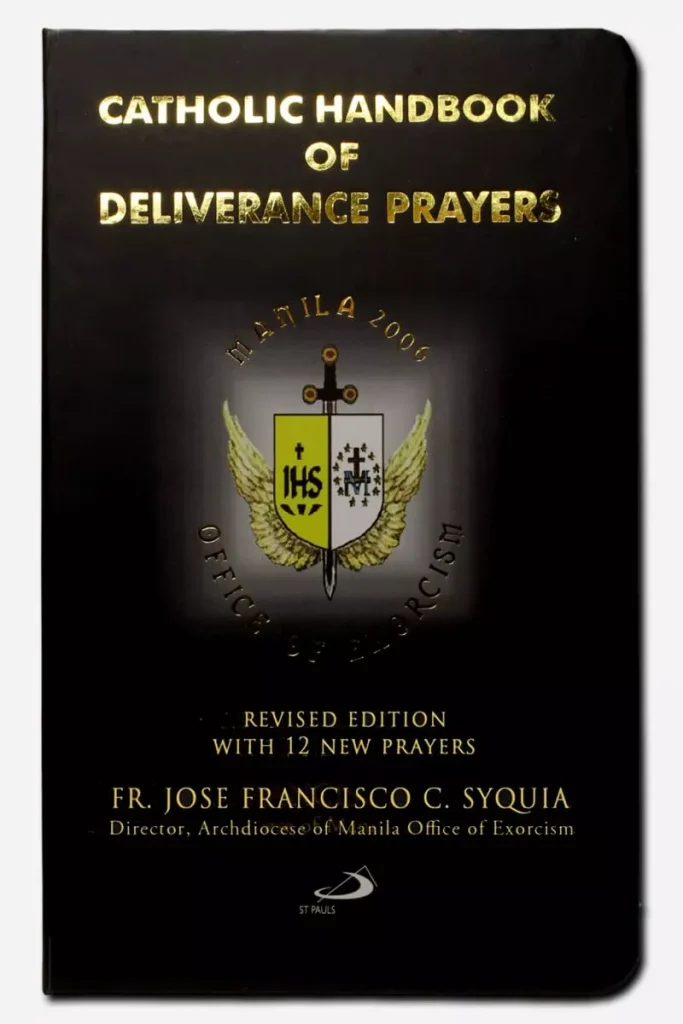
I also advise you to get a hand from one of these books that are written and compiled by a real Exorcist. I also have these books, but I cant published its prayer here on our website due to a copyright issue.
Catholic Handbook of Deliverance Prayers By Fr. Jose Francisco C. Syquia
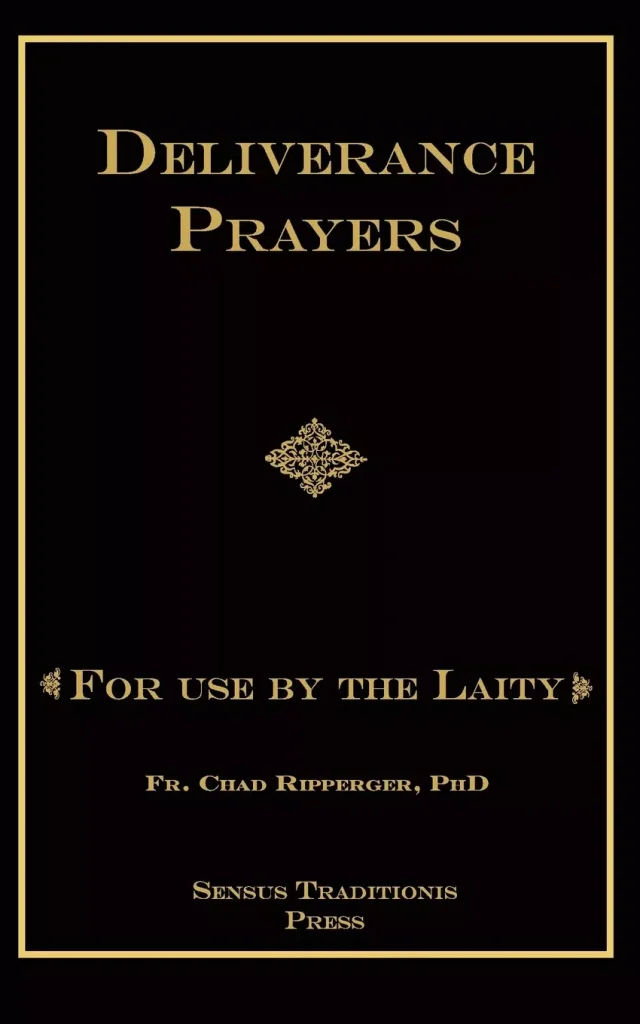
Deliverance Prayers For Use by the Laity By Fr. Chad Ripperger
Final Reflection: Walking in the Freedom of Christ
Navigating family history can sometimes feel overwhelming, especially when confronting dark patterns, ancestral wounds, or unexplainable spiritual warfare. Yet, the foundational takeaway of breaking generational curses catholic teaching is not fear or obsession with the diabolical—it is unwavering confidence in the triumph of Jesus Christ.
The Cross of Calvary stands as the absolute turning point in human history, forever breaking the legal claims of darkness and establishing the supreme authority of divine grace over every human bloodline.
No ancestral secret, occult history, or generational affliction possesses greater weight than the Precious Blood of Jesus Christ and the authority given to Holy Mother Church.
By living in a state of sanctifying grace, frequenting Sacramental Confession, offering Holy Masses for your lineage, and consecrating your household to the Sacred Heart, you reclaim your home as a true domestic church. Step forward in total peace, knowing that in Christ, your family tree is no longer defined by the sins of the past, but by the eternal mercy and freedom of God.
Frequently Asked Questions (FAQ)
Does Holy Baptism automatically break every generational curse?
Holy Baptism removes all guilt of sin and infuses sanctifying grace into the soul. However, while Baptism severs the legal claim of original sin and restores communion with God, it does not instantly eradicate physical, psychological, or historical family wounds. Residual spiritual inclinations, familial trauma, or open doors left by ancestral sins may still leave a household vulnerable to diabolical harassment. Clearing these lingering footholds requires ongoing Sacramental life, intentional prayer, and targeted deliverance.
Can Freemasonry or occult practices by my ancestors affect me today?
Yes, ancestral involvement in Freemasonry, witchcraft, or occult rituals can create ongoing spiritual oppression. These practices involve formal oaths and spiritual alliances that open doors to demonic influence over a bloodline. While descendants do not inherit the moral guilt of an ancestor’s secret vows, they can experience unexplainable spiritual heaviness, emotional torment, or spiritual attacks. This oppression is broken by explicitly renouncing those ancestral vows in prayer and receiving Sacramental Absolution.
What is the difference between a generational curse and generational trauma?
Generational trauma is a natural psychological and biological condition, whereas a generational curse is an extraordinary spiritual affliction. Generational trauma involves destructive behavioral habits, severe emotional wounds, addiction, or abuse passed down through learned environmental patterns and epigenetics. A generational curse occurs when demonic entities actively exploit those exact psychological vulnerabilities and family openings to maintain spiritual harassment across generations.
How many generations does a generational curse last?
Scripture notes that the temporal consequences of sin can extend to the “third and fourth generation” (Exodus 20:5) for those who reject God. However, this warning is strictly bounded by divine compassion. Sacred Scripture emphasizes that God’s covenant mercy extends to “a thousand generations” (Deuteronomy 7:9) for those who love Him and keep His commandments. Through the authority of Christ, any generational curse can be severed immediately, regardless of how long it has persisted in a bloodline.