How to Put On the Full Armor of God: A Daily Strategy for Laypeople
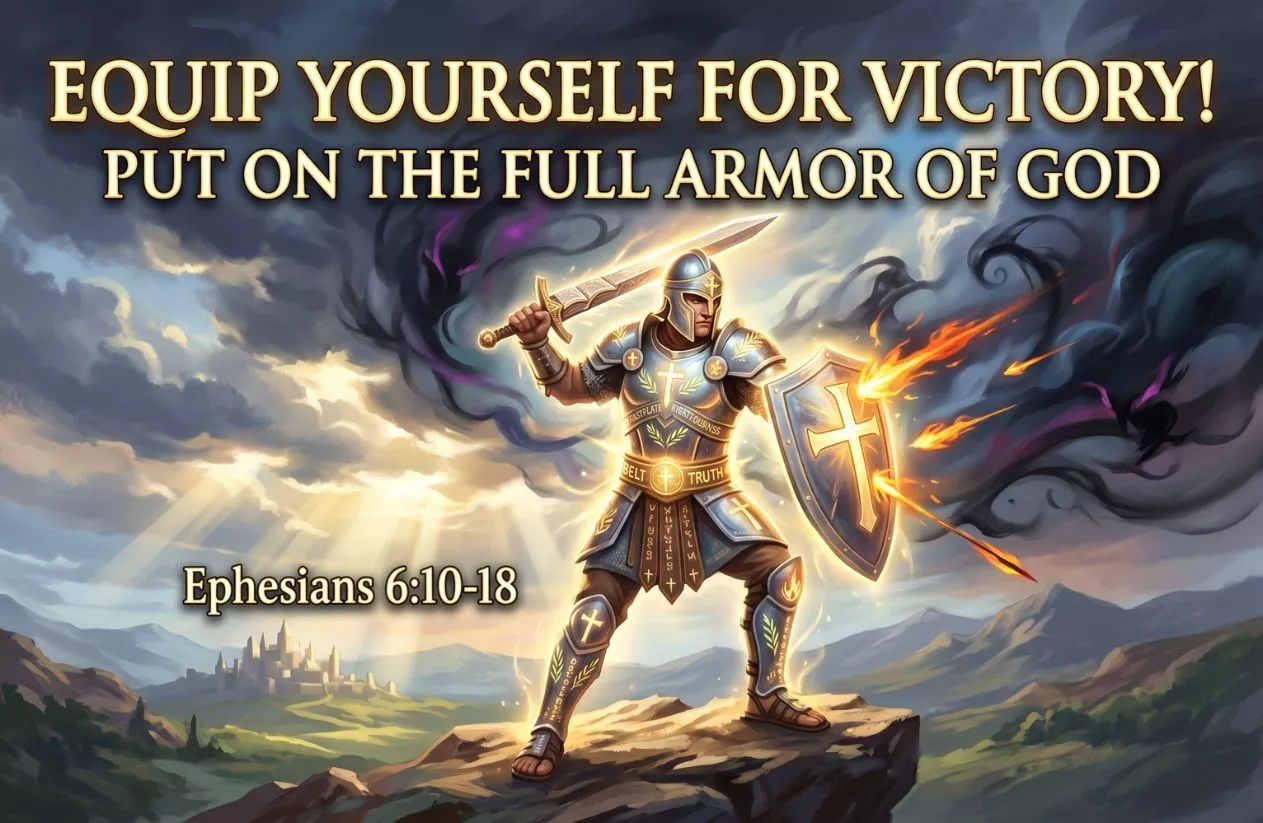
To put on the full armor of god means to consciously equip oneself with the spiritual defenses provided by Christ to resist temptation, protect the mind, and stand firm against demonic influence. For modern laypeople, this is not an abstract theological concept—it is a concrete, daily practice of anchoring your intellect, heart, and emotions in divine truth before engaging with the world.
By integrating St. Paul’s classic military imagery with traditional Christian morning prayer, you can successfully shield your soul from the unique psychological and spiritual hazards of our time.
The Modern Battleground: Why We Need the Armor Today
Every morning, an invisible war begins the moment you wake up. For most of us, the first engagement does not happen on a physical battlefield, but on a five-inch digital screen. Before our feet even hit the floor, we are bombarded by notifications, curated cultural outrages, and algorithmic feeds designed to spark anxiety, envy, and distraction.
This is the front line of modern spiritual warfare. The enemy of our souls rarely uses overt frontal assaults against laypeople living in the world; instead, he relies on slow, digital friction—gradually eroding our peace, distorting objective truth, and chipping away at our moral clarity.
When St. Paul wrote his famous letter to the Ephesians from a Roman prison, he looked at the guards chaining him and saw a perfect spiritual analogy. He realized that to survive in a hostile spiritual climate, a believer needs an intentional, systematic defense strategy.
Every Christian, regardless of denomination, instantly recognizes the power of the armor of god. It is a universal biblical blueprint for spiritual survival. Yet, there is a massive gap between knowing the scripture passage and actually knowing how to put on the full armor of god when you have a morning commute, an overflowing inbox, and a family to care for.
Laypeople cannot retreat to a quiet monastery to escape the noise. We have to fight for our holiness in the midst of office cubicles, school drop-off lines, and internet browsers.
To stand firm, we must translate St. Paul’s ancient Roman military imagery into a practical, modern routine. By anchoring our day in a dedicated spiritual routine, we can transform these theological concepts into an unshakeable shield against the chaos of the digital age.
Table of Contents
The Battleground of the Layperson: Understanding the Armor of God Scripture

To build a daily strategy that works, we must first understand the biblical and historical foundation of St. Paul’s words. Let us establish these core theological facts clearly so we can build our daily defense on solid rock.
Quick Summary: What and Where is the Armor of God?
| Question | Biblical Fact (Direct Answer) |
|---|---|
| Where is the armor of god scripture located? | The primary armor of god bible verse is found in the New Testament in Ephesians 6:10-18. |
| What is the armor of god? | The armor of god is a spiritual metaphor representing the supernatural protection, virtues, and graces given to a believer by Jesus Christ to withstand the temptations and assaults of the devil. |
Exegesis for the Modern Mind: Paul’s Prison Vision
When analyzing the armor of god scripture, context is everything. St. Paul did not write his letter to the Ephesians from a peaceful theological retreat. He wrote it while under house arrest in Rome, literally chained to a rotating guard of Roman legionaries (likely from the elite Praetorian Guard).
As Paul looked at the guard standing beside him, his eyes did not just see iron, bronze, and leather. Under the inspiration of the Holy Spirit, he saw a vivid, tangible blueprint for spiritual survival.
He realized that just as a Roman soldier would never dream of stepping onto a physical battlefield without his heavy protective gear, a Christian must never step into the world spiritually naked.
The Greek term Paul uses is panoplia, which literally translates to “all-complete protective armor.” It refers to the heavy armor of a Roman infantryman designed for hand-to-hand, life-or-death combat.
In ancient times, if a soldier forgot even one piece of his panoplia, his enemy would instantly identify and exploit that exact vulnerability. The same is true for modern believers.
If you guard your mind but neglect your heart, or if you possess deep theological knowledge but have no peace, the enemy will exploit the gap.
The Secular vs. Spiritual Reality for Laypeople
For classic Roman soldiers, the battlefield was loud, muddy, and bloody. For modern laypeople, the battlefield is quiet, clean, and dangerously subtle.
Our combat does not take place in ancient valleys, but in ordinary, secular environments:
- Office Cubicles: Where gossip, corporate backstabbing, and professional envy test your charity and truth.
- Family Living Rooms: Where exhaustion, financial stress, and domestic friction threaten your peace and patience.
- Digital Interfaces: Where algorithmic feeds feed your pride, stimulate lust, and cultivate consumerism.
This is why understanding the armor of god scripture is so critical. The devil’s goal is not to make you a cartoonishly evil villain; his goal is to subtly detach you from God’s grace through daily, unnoticed compromises.
To prevent this, we must unpack St. Paul’s military metaphor piece by piece and apply it directly to our high-tech, high-stress lives.
Piece by Piece: Striving for Holiness in a Digital Age
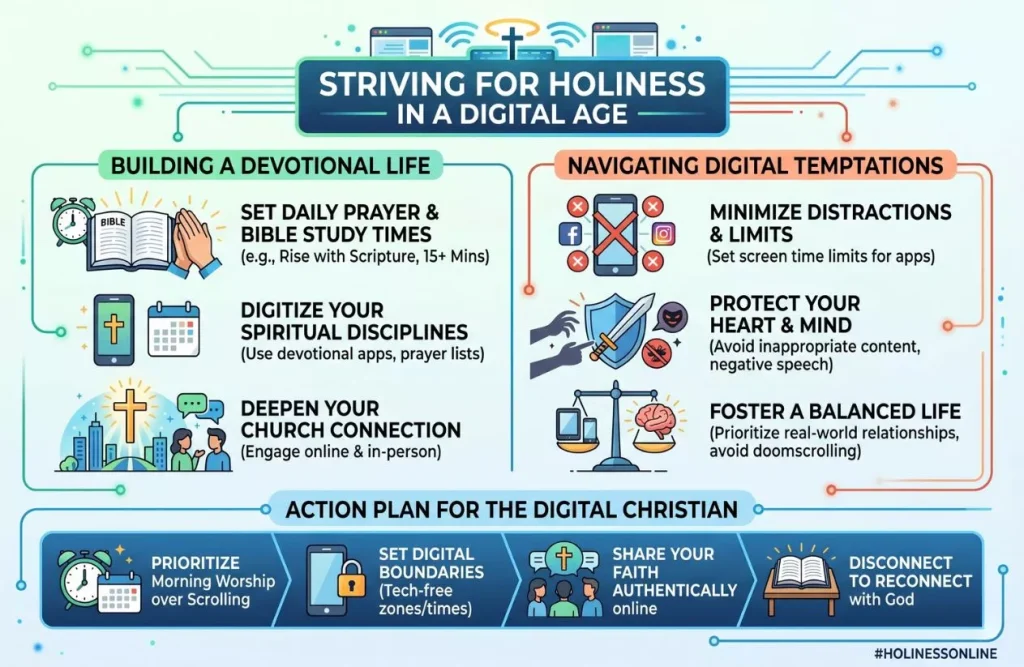
To effectively engage in spiritual warfare, we must dissect the Roman legionary’s gear and translate each physical defense into a specific spiritual discipline. Here is how you can practically equip each component of the panoplia to protect your soul in a hyper-connected, secular world.
1. The Belt of Truth: Defeating Modern Digital Lies
The Belt of Truth (known as the balteus or cingulum) was a thick leather belt that secured the soldier’s tunic, supported his core, and held his sword scabbard firmly in place.
Without the belt, the soldier’s garments would flap loosely, causing him to trip, and he would have no secure place to carry his weapon. In ancient combat, the belt held everything together.
In our digital age, the battle is for objective reality itself. We live in a culture dominated by moral relativism, “alternative truths,” and algorithmic echo chambers designed to feed us narratives that stoke anger or self-righteousness.
To strap on the Belt of Truth daily, you must:
- Commit to Intellectual Integrity: Refuse to share unverified gossip, deceptive headlines, or slanderous posts online. Truth is not a political tool; it is a reflection of God Himself.
- Live in Radical Transparency: Reject the dual-life temptation. Do not maintain a polished, highly moral “public profile” while feeding hidden vices, secret addictions, or uncharitable habits in private digital spaces.
2. The Breastplate of Righteousness: Safeguarding the Heart from Corruption
The Breastplate of Righteousness represents the lorica segmentata, a heavy torso armor of overlapping iron bands engineered to protect the soldier’s most vital organs, especially the heart, from fatal spear thrusts.
A soldier who entered battle without his breastplate was vulnerable to instant, mortal wounds.
For the modern layperson, the “heart” represents the seat of our desires, affections, and will. The enemy rarely attempts to destroy your faith all at once; instead, he aims to pierce your heart with small, daily infections of toxic emotions.
Algorithmic media is specifically designed to bypass your intellect and strike directly at your emotions—triggering intense envy through curated lifestyles, lust through highly visual media feeds, and wrath through comment sections.
Putting on this breastplate means guarding your affections. You do this by:
- Cultivating the State of Grace: True righteousness is not self-made moralism; it is the infused grace of Christ. For Catholics, this means maintaining a lifestyle of regular Sacramental Confession to instantly repair any breaches in your spiritual defense.
- Curating Your Intake: Consciously unfollowing or blocking content that consistently sparks envy, lust, or uncharitable anger within you.
3. Shodding Your Feet with the Gospel of Peace: Standing Firm on Shaky Ground
The Shoes of the Gospel of Peace correspond to the caligae, heavy-soled Roman military sandals fitted with sharp iron studs or cleats designed to grip slippery, muddy terrain and prevent a soldier from sliding backward under pressure.
If a soldier lost his footing in the scrum of ancient combat, he was as good as dead.
The modern cultural landscape is spiritual mud. It is unstable, constantly shifting, and designed to make you lose your footing through perpetual panic, outrage, and crisis fatigue.
Shodding your feet with the Gospel of Peace means anchoring your internal emotional state so deeply in Christ’s ultimate victory that you do not slip when the world panics.
- Guard Your Morning Peace: Before you look at the news or check emails, plant your feet firmly on the rock of prayer. If your day begins in chaotic reaction to your phone, you are stepping onto the battlefield barefoot.
- Be a Carrier of Peace: When corporate tension rises or family dynamics get strained, bring Christ’s quiet confidence into the room rather than absorbing and multiplying the surrounding anxiety.
4. The Shield of Faith: Quenching the Flaming Darts of Doubt
The Shield of Faith refers to the Roman scutum, a massive, rectangular, curved shield made of wood, covered in leather, and deliberately soaked in water before battle to extinguish incoming iron-tipped flaming arrows.
When locked together, a Roman unit’s shields formed a literal wall (testudo) that kept the entire cohort safe from projectile barrages.
The enemy’s favorite projectile is the “flaming dart”—a sudden, unexpected thought of despair, intense self-doubt, or comparison that flares up instantly in your mind. Online, these darts arrive in the form of imposter syndrome, existential dread, or sudden, deep cynicism.
The Shield of Faith is not a blind, emotional feeling; it is an active, intellectual trust in the objective promises of God, regardless of how you feel in the moment.
- Acknowledge the Arrow, Do Not Feed It: When a thought of despair (“You’re a failure,” “God doesn’t hear you”) strikes, recognize it as an external dart. Extinguish it immediately by actively proclaiming God’s promises: “My God is faithful, and I trust His word over my passing emotions.”
- Find Your Cohort: Do not isolate yourself. Just as Roman shields worked best when locked together, your faith is sustained by surrounding yourself with a real-life, physical community of believers.
5. The Helmet of Salvation: Protecting the Mind and Thoughts
The Helmet of Salvation corresponds to the galea, a robust bronze or iron helmet crafted to protect the soldier’s skull, forehead, and temples from the crushing downward strikes of an enemy’s heavy broadsword.
Without it, a single blow to the head would instantly incapacitate or kill the warrior.
Today, the battle is intensely cognitive. Our minds are bombarded with sensory overload, ideological capture, and constant noise, leading to widespread spiritual exhaustion and mental fog.
The Helmet of Salvation protects your intellect, imagination, and thoughts by grounding your deepest identity in your baptismal reality: you are a redeemed child of God.
- Filter Your Cognitive Spaces: Guard what enters your mind. Establish a “digital fast” or a strict limit on screen time to allow your mind quiet spaces to contemplate divine things.
- Take Thoughts Captive: The moment a toxic, anxious, or impure thought enters your mind, use your “helmet” to reject it. Remind yourself: “I am a temple of the Holy Spirit, purchased by the blood of Christ. I do not belong to these thoughts.”
6. The Sword of the Spirit: Weaponizing the Word of God
The Sword of the Spirit is the gladius, a short, double-edged thrusting sword designed for rapid, highly precise, and lethal offensive strikes in close-quarters combat.
While all other pieces of the panoplia are defensive, the gladius is the weapon used to actively defeat the adversary. St. Paul explicitly defines this sword as the Word of God.
We see the perfect model for this weapon in the Gospels, where Jesus Christ defeats Satan’s temptations in the desert by quoting Scripture. He did not engage in long, philosophical debates with the devil; He drew the sword of Scripture and made precise, direct strikes.
To use the Sword of the Spirit in your daily life, you cannot rely on a closed Bible sitting on your nightstand. You must carry it inside your heart.
- Practice Scripture Memorization: Memorize specific, short verses to counter your specific, recurring temptations.
- If you struggle with anxiety: “The Lord is my shepherd, I shall not want.” (Psalm 23:1)
- If you struggle with fear: “God has not given us a spirit of fear, but of power, love, and self-control.” (2 Timothy 1:7)
- If you struggle with anger: “The anger of man does not produce the righteousness of God.” (James 1:20)
- Slash Through Temptation in Real-Time: When the temptation strikes, speak the verse immediately in prayer. The living Word of God possesses active, spiritual power to cut through demonic suggestions.
Related Article: Bible Verses For Protection
The Daily Strategy: An Armor of God Prayer for the Morning

To put on the whole armor of god is not a passive mental state, but an active, liturgical discipline. In the Catholic tradition, this discipline finds its home in the Morning Offering—a prayer of consecration that transforms your daily actions, struggles, and duties into a shield against temptation and a force for good.
When St. Paul exhorts us to take up the bible armor of god, he is inviting us to build a daily routine. If you step onto the modern digital battlefield without first anchoring your intellect, imagination, and heart in the presence of Jesus Christ, you are stepping out spiritually defenseless.
To prevent this, we must merge Ephesians 6 with traditional Catholic morning habits. Below is a highly structured, custom full armor of god prayer written specifically for modern laypeople to recite the moment they wake up—before they look at their phones, check their emails, or leave the house.
The Morning Consecration: The Full Armor of God Prayer
Recite this daily, ideally on your knees or in a quiet prayer space, to dedicate your day and secure your spiritual defenses.
In the Name of the Father, and of the Son, and of the Holy Spirit. Amen.
Heavenly Father, I adore You, and I thank You for bringing me safely to the beginning of this new day. I offer You all my prayers, works, joys, and sufferings in union with the Holy Sacrifice of the Mass throughout the world, for the salvation of souls, and the deliverance of all who are bound by evil.
Today, Lord, I stand firm in the victory of Your Son, Jesus Christ, and by His authority, I prepare for the day’s battle. Armed with His grace, I consciously put on the whole armor of god to defend my soul and my family from the assaults of the enemy.
I buckle the Belt of Truth around my waist. Lord, anchor my mind in Your absolute, unchanging truth. Protect me from the lies of moral relativism, the deception of digital echo chambers, and the temptation to live a double life. Let all my thoughts, words, and actions today be transparent, integral, and aligned with Your Holy Will.
I put on the Breastplate of Righteousness over my heart. Lord Jesus, cover my heart with Your perfect righteousness. Guard my desires, my feelings, and my will. Let nothing pierce my soul today—no toxic resentment, no online envy, and no impure images. I claim the protection of Your Sacramental grace and resolve to guard my eyes and my heart from all spiritual corruption.
I shod my feet with the preparation of the Gospel of Peace. Lord, plant my feet firmly on the unshakeable rock of Your peace. As I walk through the chaotic spaces of my home, my office, and the digital world, let me not slide into panic, outrage, or anxiety. Make me an active instrument of Your peace, carrying Your quiet confidence to everyone I encounter.
I take up the Shield of Faith to quench the flaming arrows of the enemy. My Jesus, I raise the shield of active, total trust in Your divine promises. When sudden arrows of despair, self-doubt, comparison, or sudden temptation strike my mind from the screens around me, I extinguish them in Your Name. I believe that You are with me, that You are faithful, and that no weapon formed against me shall prosper.
I place upon my head the Helmet of Salvation. Lord, seal my mind, my intellect, and my imagination with the reality of my baptism. I am Your redeemed child. Protect my cognitive spaces from sensory overload, ideological capture, and mental exhaustion. I take every thought captive today and dedicate my mental energy solely to what is true, honorable, and pure.
I grasp the Sword of the Spirit, which is the Word of God. Holy Spirit, sharpen my mind to wield Your living Word. Let Your Scripture be alive in my heart today. When temptation approaches, grant me the grace to instantly speak Your truth, cutting through the whispers of the devil with precise, holy scripture.
O Holy Mother Mary, Queen of Angels and Terror of Demons, cover me with your mantle of protection. St. Michael the Archangel, defend us in battle. Guardian Angel, watch over my steps this day.
Amen.
Beyond the Morning: Keeping Your Armor Secured

To maintain the full armor of god throughout your busy day, a layperson must practice continuous spiritual vigilance. It is not enough to simply put on the armor of god during your morning prayers; you must actively monitor your defenses as you transition from morning prayer into the secular environments of your day.
Spiritual armor is not visible to the naked eye, but you will instantly feel when a piece has “slipped” or taken a heavy hit. Knowing how to recognize these moments in real-time is the key to maintaining an unyielding defense:
- Recognizing a Slipping Belt: When you find yourself exaggerating a story to make yourself look better at work, or silently validating a piece of office gossip, your Belt of Truth (balteus) has loosened. You have allowed deception to compromise your integrity.
- Recognizing a Cracked Breastplate: When sudden, intense resentment against a family member rises, or when you let an unchaste glance at a screen go unchecked, your Breastplate of Righteousness (lorica) has sustained a crack. Your heart’s affections have drifted from God’s grace.
- Recognizing Bare Feet: When an unexpected email, a market downturn, or a piece of bad news instantly throws you into a tailspin of panic, your Shoes of Peace (caligae) have slipped off. You are no longer standing firm on the unshakeable rock of Christ’s providence.
The moment you identify a compromised piece of armor, do not wait until the evening to fix it. Make an immediate, interior act of alignment: “Lord Jesus, secure my heart. Holy Spirit, restore my peace.” Practicing this quick mid-day realignment ensures that the enemy cannot exploit temporary lapses in your focus.
The Ultimate Reinforcement: The Sacraments as the Divine Forge
While a dedicated armor of god prayer is an indispensable daily weapon, we must remember that laypeople cannot sustain their spiritual defenses on personal discipline alone.
Our prayers are the daily maintenance of our gear, but the Sacraments of the Catholic Church are the actual, supernatural forge where our armor is cast, tempered, and completely restored.
In the bible the armor of god is described as a heavy, battlefield-tested shield and sword designed to withstand supernatural forces. To withstand supernatural warfare, we require supernatural grace. The two sacraments of regular lay life provide exactly this:
- Holy Mass and the Eucharist: The Holy Eucharist is the ultimate reinforcement of our spiritual defenses. When you receive the Body, Blood, Soul, and Divinity of Jesus Christ, you are not just wrapping armor around yourself—you are inviting the Living God to dwell within you. He becomes your shield from the inside out.
- Sacramental Confession: In combat, armor gets dented, cracked, and heavily soiled. Confession is the divine workshop where Christ Himself repairs every single breach in your armor. If you have committed a grave sin, your Breastplate of Righteousness is completely compromised. Confession instantly restores you to a state of sanctifying grace, welding the metal back together stronger than before.
Aiming for a routine of regular Confession (at least once a month) and attending Mass as often as your lay schedule allows is the single most effective way to keep your spiritual armor impenetrable.
Conclusion: Sent to Stand, Not to Hide
When we study the primary armor of god verses in Ephesians 6, we notice a striking detail about St. Paul’s description of the Roman panoplia: there is absolutely no protection provided for a soldier’s back.
The heavy Roman legionary armor was built exclusively for forward-facing combat. It assumed that the soldier would never turn his back to flee.
Furthermore, the massive scutum shield was designed to overlap with the shields of the soldiers to his left and right. This biblical detail sends a clear message to modern laypeople living in a highly secular, digital culture.
The full armor of god is not a bunker. God did not give you these spiritual defenses so that you could retreat into isolation, hiding from the world in fear of spiritual contamination.
He equipped you so that you could step directly into the chaos of the world—into your offices, your schools, your neighborhoods, and your social media feeds—and stand firm as a light in the darkness.
By starting every single morning on your knees, consciously wrapping yourself in the truth, righteousness, peace, faith, salvation, and living Word of Jesus Christ, you can step out of your front door with unshakeable confidence. You do not fight for victory; you fight from the victory that Christ has already won on the Cross.
Take up your armor today, stand your ground, and let the peace of Christ reign in your heart.
Related Article: The Saint Benedict Medal: The History and Meaning Behind the Exorcism Medal
FAQ Section:
What is the armor of god?
- The armor of God is a spiritual defense framework described by St. Paul in the New Testament, symbolizing the supernatural virtues and protections given to Christians to resist temptation and stand firm against demonic influence.
How to put on the armor of god?
- You put on the armor of God daily by grounding your mind in prayer, maintaining a state of grace through the Sacraments, and actively aligning your choices with biblical truth before interacting with the world.
Where is the armor of god in the bible?
- The armor of God is located in the New Testament, specifically in Ephesians 6:10-18, where St. Paul dictates the passage from a Roman prison.