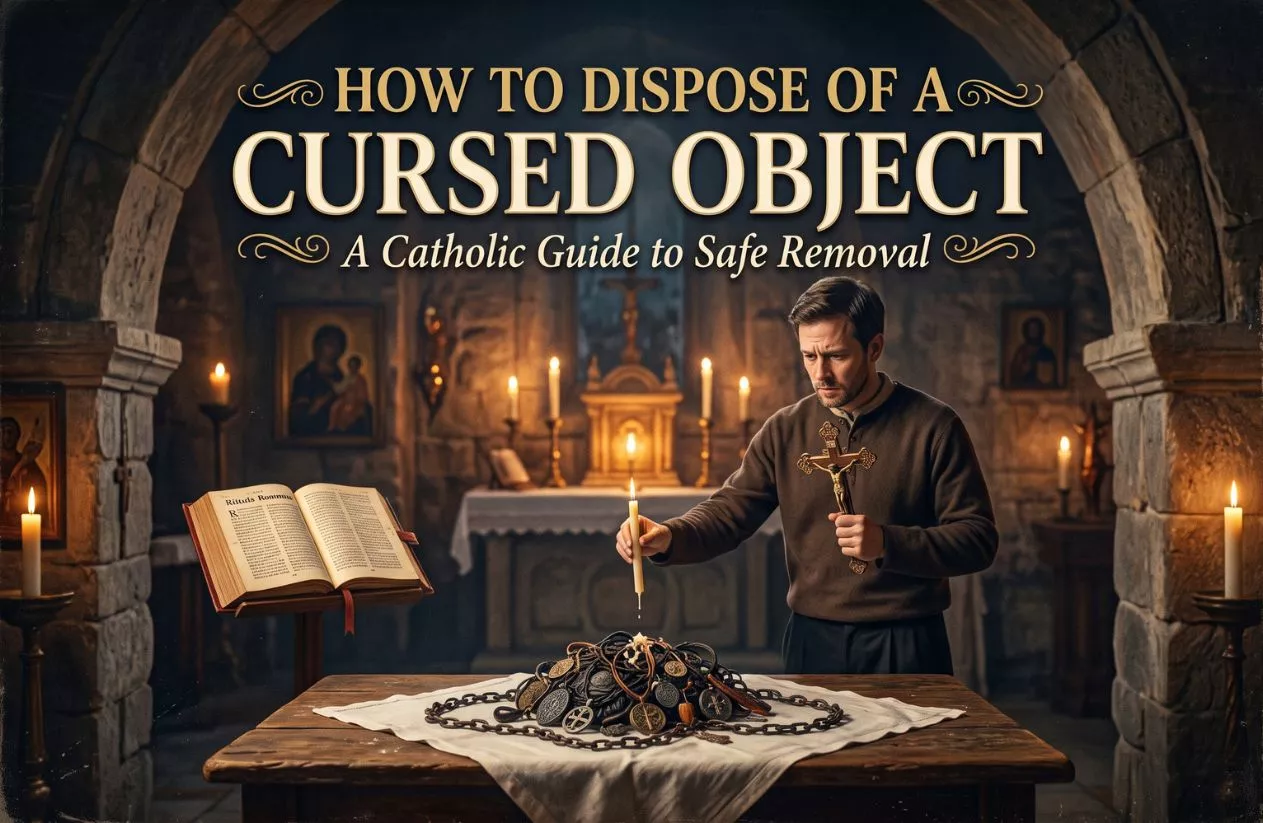
How to Dispose of a Cursed Object: A Catholic Guide to Safe Removal
Affiliate Disclosure: This post may contain affiliate links to Catholic resources, books, and sacramentals we recommend. If you purchase through these links, we may earn a small commission at no additional cost to you. All affiliate earnings are reinvested directly into improving our platform, supporting our mission, and creating more valuable spiritual warfare resources for the faithful. Thank you for your support!
Quick Summary: Learning how to dispose of a cursed object as a Catholic requires a systematic spiritual approach: sprinkle the item with Holy Water or exorcised salt, pray a prayer of protection, render the item unusable by breaking or burning it, and dispose of the remains by burying them in deep soil or throwing them into running water. Never sell, donate, or pass on cursed or occult items. For severely infested items, consult a Catholic priest or diocesan exorcist before handling.
Discovering an occult relic, a suspicious heirloom, or a New Age artifact in your home can bring a sudden sense of spiritual unease. Whether acquired through lack of knowledge, received as an unexpected gift, or left behind by previous homeowners, spiritually contaminated items have no place in a Christian household.
Knowing how to dispose of a cursed object correctly is essential for restoring peace, reclaiming your living space, and protecting your family from unnecessary diabolical harassment.
The Catholic Church offers clear, time-tested pastoral guidelines for neutralizing and destroying contaminated items without invoking fear, superstition, or spiritual recklessness.
Through the power of sacramentals, explicit prayers of renunciation, and proper physical disposal, you can permanently sever any spiritual foothold attached to material things.
Table of Contents
Identifying Contaminated and Occult Objects in Your Home
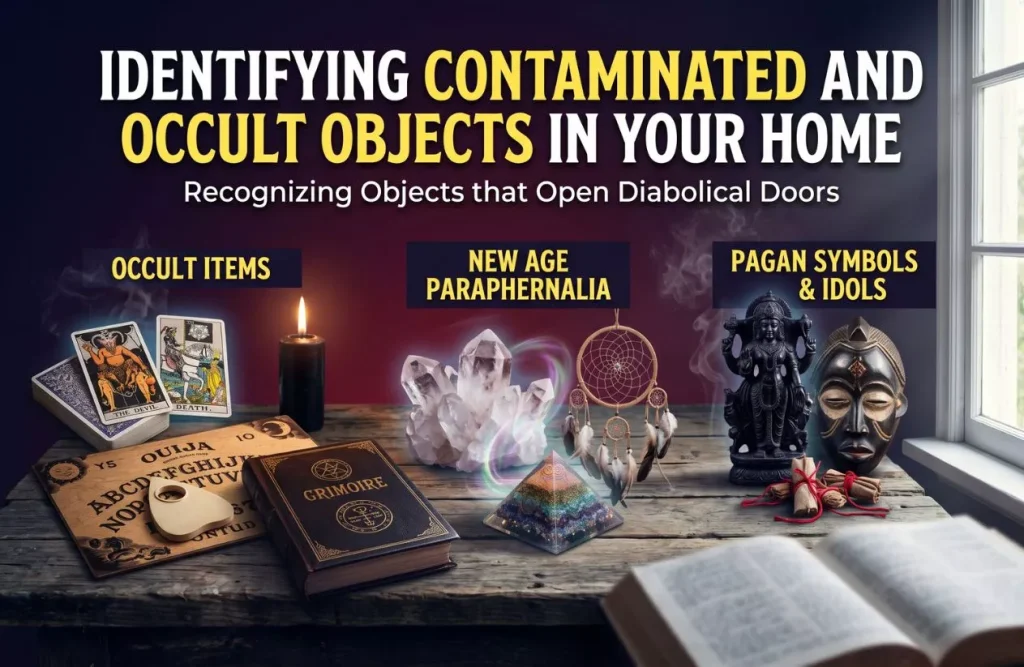
Before taking physical steps on disposing this kind of items, it is vital to discern what actually makes a physical item spiritually cursed.
In Catholic demonology, physical matter itself is part of God’s good creation, but it can become a vehicle for spiritual harm when dedicated to demonic entities, used in idolatry, or targeted by malicious spiritual practices.
Learning how to dispose of cursed objects begins with recognizing which items carry an active spiritual contamination or open a door to diabolical infestation within your domestic church.
What Makes an Object “Cursed” or Contaminated?
According to Catholic exorcists and pastoral theologians, an object becomes spiritually contaminated through two primary mechanisms: demonic dedication and malicious intent.
When an item is used in esoteric rituals, pagan worship, or occult practices, it is formally set apart for spiritual forces opposed to God. Demonic entities do not “possess” physical matter in the same way they possess a human soul; rather, they attach themselves to the item as a legal foothold, using it as an anchor to harass anyone who keeps, honors, or uses it.
Understanding how to dispose of a cursed object requires recognizing these distinct categories of contamination:
- Explicit Occult Items: Paraphernalia designed explicitly for divination, spirit communication, or sorcery. This includes Ouija boards, tarot cards, grimoires (books of spells), scrying mirrors, amulets, and talismans created to harness spiritual forces outside of Divine Providence.
- New Age and Esoteric Objects: Items popularized as harmless spiritual tools that actually root themselves in esoteric or pantheistic philosophies. Examples include crystals used for “energy healing,” dreamcatchers, reiki symbols, pendulum dowsers, and literature advocating chakras or spirit guide summoning.
- Pagan and Idolatrous Relics: Physical representations of non-Christian deities or spiritist figures. This covers statues of foreign gods, ritualistic masks, spirit houses, and folk magic artifacts (such as amulets, or paraphernalia used in santería and voodoo).
- Ordinary Items Infested via Malice: Common household objects—such as jewelry, clothing, furniture, or art—that were explicitly targeted by a witch, sorcerer, or malicious individual through a formal curse, hex, or ritual before being passed to the recipient.
Categories of Contaminated Household Items
| Category | Typical Examples | Primary Spiritual Risk |
|---|---|---|
| Divination & Magic | Tarot decks, Ouija boards, pendulum kits, spell books. | Direct violation of the First Commandment; invites spirit communication. |
| Esoteric & New Age | Healing crystals, dreamcatchers, reiki symbols, chakra charts. | Replaces Christian reliance on God with belief in impersonal spiritual energy. |
| Folk Magic & Idolatry | Pagan statues, ritual masks, amulets, spiritist charms. | Formal attachment to ancestral spirits, deities, or localized occult networks. |
| Targeted Household Goods | Cursed gifts, heirloom jewelry tied to Freemasonry, hexed items. | Indirect diabolical harassment or unexplained spiritual heaviness in the home. |
Recognizing these items in your living space is not a reason for panic. God retains absolute authority over all created things, and identifying a contaminated object is simply the first practical step toward cleansing your home and re-establishing the peace of Christ.
Spiritual Symptoms: Signs an Object May Be Infested
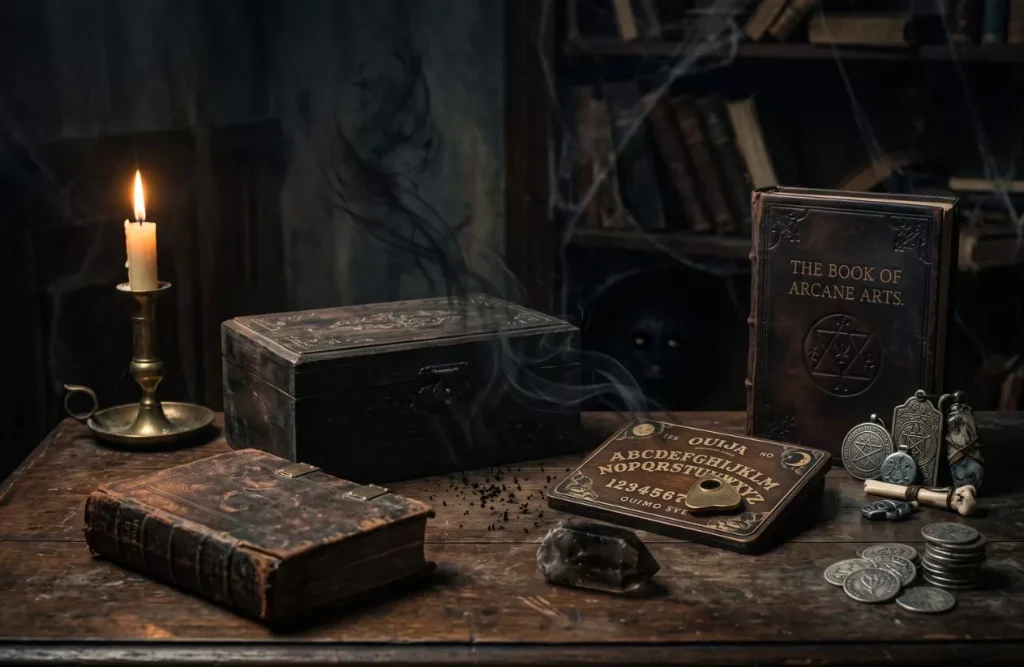
Before taking physical steps to remove a suspicious item, it is important to understand how diabolical contamination manifests in a home. In Catholic demonology, a demonic presence attached to a physical place or material item is known as diabolical infestation.
Unlike diabolical possession, which targets the human body, infestation is localized to physical matter—such as a building, a piece of furniture, or an occult relic. Recognizing these indicators helps believers discern when it is time to learn how to properly dispose of cursed objects and restore spiritual order to their living space.
What Is Diabolical Infestation?
Diabolical infestation occurs when evil spirits use a physical object as an anchor or focal point for their activity. This typically happens because the item was dedicated to dark forces, used in spirit communication, or introduced into the home following a malicious curse.
The object itself does not gain supernatural power; rather, it acts as an open door, allowing demonic entities to exert a localized influence over the immediate environment.
Key Indicators of Spiritual Contamination
Catholic exorcists and spiritual directors highlight several common signs that suggest a specific item may be carrying spiritual contamination:
1. Atmospheric Heaviness and Psychological Disturbance
- Sudden Environmental Shift: Entering the room where the object is kept produces an immediate, unexplainable feeling of fear, oppression, or exhaustion.
- Targeted Nightmares: Family members experience recurring, intense nightmares or sleep paralysis that only occurs in proximity to the item or began immediately after the object entered the house.
2. Physical Manifestations Centered on the Item
- Localized Foul Odors: Sudden, unexplained smells of sulfur, rotting meat, or burning garbage that concentrate around the object and cannot be traced to any natural source.
- Unexplained Phenomena: Knocking sounds, sudden temperature drops, or electronic disturbances occurring near the item without mechanical cause.
- Animal Aversion: Domestic pets consistently avoid the object, growl at it, or display uncharacteristic fear when near the area where it is displayed.
3. Sudden Aversion to the Sacred
- Resistance to Prayer: Family members feel an unusual, irrational resistance or irritation when attempting to pray, read Sacred Scripture, or recite the Rosary near the item.
- Reaction to Sacramentals: The unexplained moving, breaking, or hiding of holy objects—such as crucifixes, blessed candles, or Rosaries—placed near the contaminated item.
Distinguishing between natural explanations (such as psychological stress or physical house repairs) and genuine spiritual infestation requires calm, rational discernment.
However, if these symptoms consistently trace back to a specific occult, New Age, or suspicious item, removing it through proper Catholic procedures is the safest course of action.
How to Properly Dispose of Cursed Objects: Canonical Step-by-Step Procedure
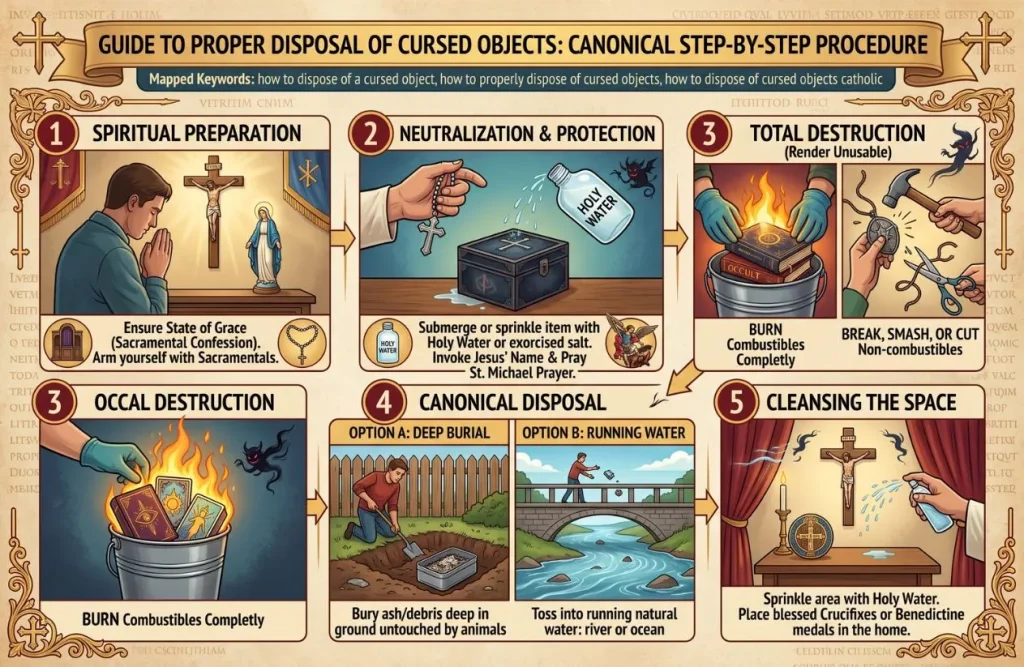
When learning how to dispose of a cursed object, lay Catholics must approach the process with spiritual soberness, calm confidence, and strict reliance on the authority of Jesus Christ.
The Church does not rely on complex esoteric formulas to break spiritual attachments. Instead, Catholic deliverance protocol focuses on stripping the item of its spiritual influence through sacramentals, rendering it physically unusable, and executing a respectful, final disposal.
Follow this step-by-step procedure to safely destroy and dispose of contaminated items in full alignment with how to dispose of cursed objects catholic practice.
Step-by-Step Catholic Disposal Protocol
Step 1: Spiritual Preparation
Before handling any contaminated or occult item, ensure you are in a state of sanctifying grace through recent Sacramental Confession.
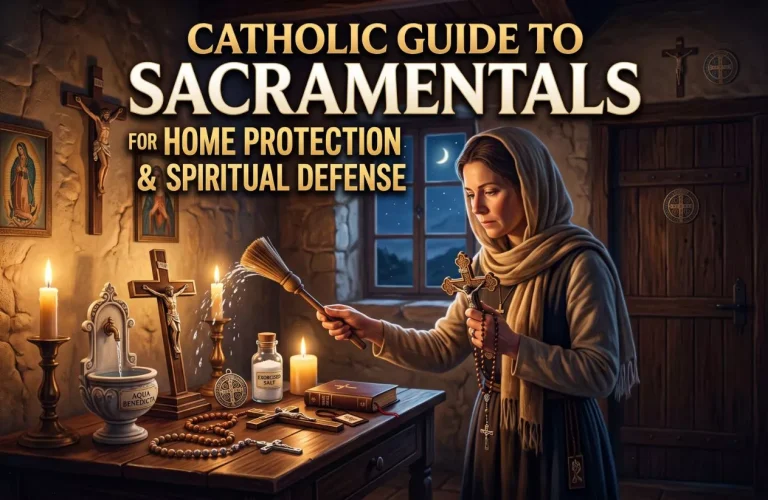
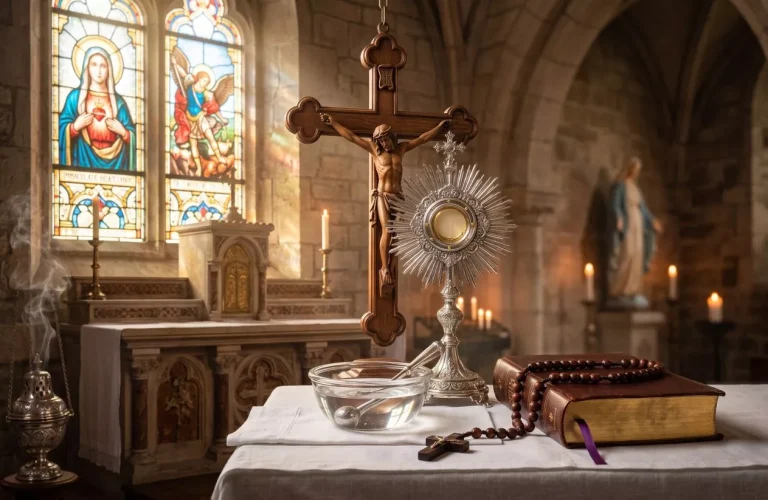
Do not attempt spiritual work while carrying unconfessed mortal sin. Arm yourself with Catholic sacramentals—specifically Holy Water, exorcised salt, or blessed oil—and keep a blessed Rosary on your person.
Step 2: Neutralization and Protection
Place the object on a clean surface. Generously sprinkle or submerge the item with Holy Water or exorcised salt. As you apply the sacramental, speak a simple prayer of protection, invoking the Holy Family and the archangels:
“In the name of Jesus Christ, by the power of His Precious Blood and through the intercession of the Blessed Virgin Mary and St. Michael the Archangel, I neutralize any evil presence or curse attached to this object, and I command every spirit associated with it to depart immediately to the foot of the Cross.”
Recite the St. Michael Prayer (The simplified form) directly after to seal the spiritual boundary.
Step 3: Total Destruction (Rendering the Item Unusable)
To prevent anyone else from ever using or being influenced by the item, you must completely ruin its physical integrity.
- Combustible Items: For tarot cards, spellbooks, wooden idols, or dreamcatchers, burn them completely outdoors in a safe metal container until reduced entirely to ash. Avoid breathing in heavy smoke.
- Non-Combustible Items: For crystals, metal amulets, glass, or ceramic statues, break, smash, cut, or hammer the item into unrecognizable fragments using proper safety gear.
Step 4: Canonical Disposal (Burial or Running Water)
Once the item is thoroughly destroyed, do not leave the ashes or fragments lying around your property.
- Burial: Take the ashes or broken pieces off-site and bury them deep within the earth in soil away from high-foot-traffic areas or animal activity.
- Running Water: Alternatively, throw non-toxic ashes or metal/stone debris into natural running water, such as a river, bay, or ocean. The continuous motion of natural water symbolically and physically carries the destroyed remnants away.
Step 5: Cleansing the Space
After disposing of the remnants, return to the area where the object was stored or displayed. Sprinkle the entire room with Holy Water or exorcised salt while praying the Lord’s Prayer.
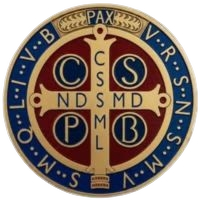
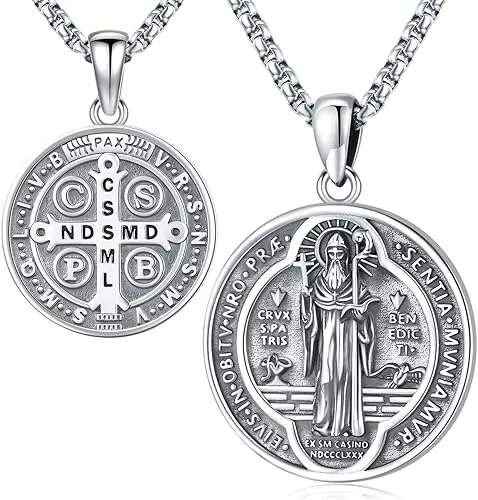
To seal the space permanently, hang a blessed Crucifix or place a blessed St. Benedict Medal near the entrance of the room.
Saint Benedict Necklace Sterling Silver 925 Protection Jewelry for Men Women
When to Seek Priestly Intervention
While lay Catholics possess the spiritual standing to safely execute how to properly dispose of cursed objects found within their own property, certain severe cases require clerical assistance:
- The object is associated with physical manifestations, such as unexplained movements, loud banging, or unprovable levitation.
- Attempting to touch or move the item triggers intense, uncharacteristic fear, nausea, or sudden physical illness.
- The item was used in high-level Satanic rituals, black magic pacts, or heavy occult curses.
In these rare circumstances, do not attempt to burn or smash the item yourself. Cover the object with a cloth sprinkled with Holy Water, leave it untouched, and contact your local parish priest or diocesan exorcist for professional canonical handling.
Critical Warnings: What NEVER to Do with Occult Items
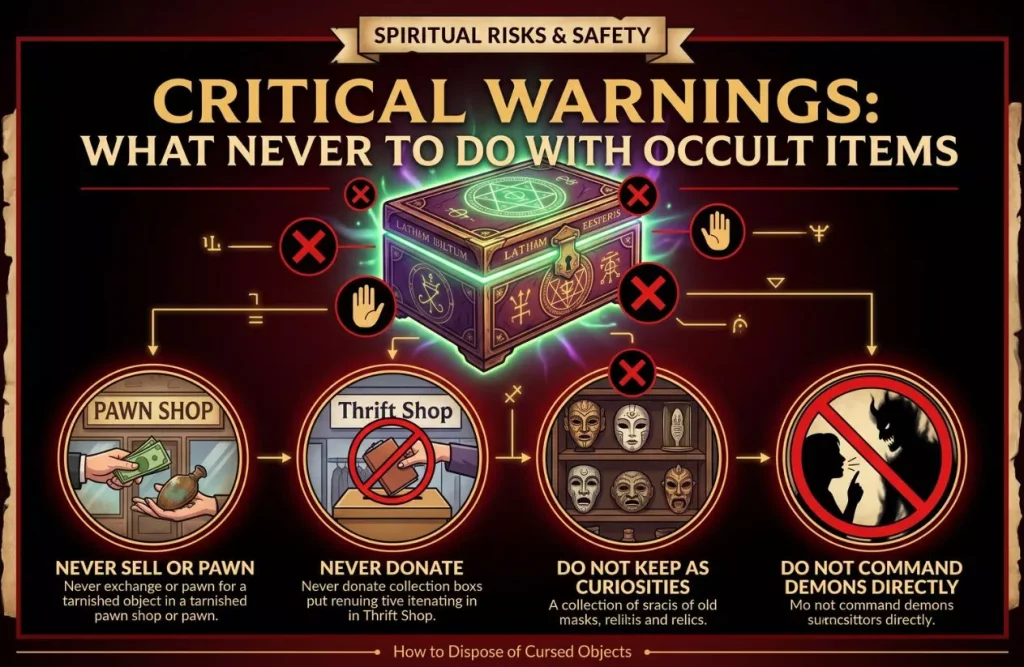
When realizing that an item in your home carries spiritual contamination, panic can lead to reckless decisions. Understanding how to dispose of cursed objects effectively means knowing not only what steps to take, but also avoiding dangerous missteps that can prolong spiritual harassment or pass the hazard onto others.
Catholic exorcists strictly warn against several common mistakes when handling occult, New Age, or contaminated objects:
1. Never Sell, Pawn, or Regift the Item
It can be tempting to sell valuable jewelry, antique art, or esoteric collectibles to recoup financial loss. However, passing a spiritually infested object to someone else—whether through a pawn shop, online marketplace, or garage sale—transfers the spiritual opening directly to an unsuspecting person.
Selling an item known to carry demonic ties or occult bindings is an act of spiritual irresponsibility. In Catholic moral theology, profiting off objects dedicated to evil or idolatry border on spiritual negligence and violates Christian charity. If an item is spiritually toxic, its economic value is zero. It must be destroyed.
2. Never Donate Contaminated Items to Charity
Donating tarot decks, dreamcatchers, Eastern idol statues, or New Age books to thrift stores, donation centers, or community drives is equally harmful. While donation stems from a desire to be helpful, placing occult items back into public circulation enables those objects to enter another household, potentially bringing spiritual oppression to an innocent family.
Thrift stores should never become dumping grounds for objects that violate the First Commandment.
3. Do Not Keep Occult Items as “Curiosities” or Historical Antiques
A frequent mistake among believers is retaining pagan relics, tribal ritual masks, or occult literature under the guise of aesthetic appreciation, historical interest, or artistic value.
Demonic entities do not respect human intellectual curiosity. Keeping an idol statue or a book of spells on a bookshelf “just as an antique” maintains an active, physical anchor within your domestic church. In the Acts of the Apostles, early Christian converts demonstrated the proper protocol when confronting occult material:
“And a number of those who practiced magic arts brought their books together and burned them in the sight of all; and they counted the value of them and found it came to fifty thousand pieces of silver.” — Acts 19:19
They did not sell the books or keep them as historical artifacts; they burned them completely despite their massive monetary value.
4. Do Not Address or Command Spirits Directly
When neutralizing a suspicious item, laypeople must never engage in direct dialogue, interrogation, or direct commanding of any evil spirit associated with the object.
Catholic canon law and exorcism protocols establish clear boundaries regarding spiritual authority:
- Ordained Priests (Exorcists): Possess ecclesial jurisdiction granted by the bishop to command demons directly using the solemn Rituale Romanum.
- Lay Faithful: Possess spiritual authority over themselves and their immediate dependents, but lack canonical authority to address spirits directly.
Attempting to shout at, question, or command a demonic spirit directly exposes a layperson to spiritual retaliation and deceptive mind games. Always direct your prayers upward to God—asking Jesus Christ, the Blessed Virgin Mary, and St. Michael the Archangel to bind and remove any evil presence attached to the object.
Frequently Asked Questions (FAQ)
Can I just throw a cursed object into the household trash?
Ordinary trash disposal is not recommended for occult items because someone else could retrieve and use them. Simply tossing a contaminated item into the garbage leaves it exposed in landfills or municipal waste streams where it can be picked up by others. Catholic protocol dictates neutralizing the item with Holy Water, physically breaking or burning it to render it completely unusable, and burying the ashes or debris deep in soil away from public access.
Should I call a priest to dispose of a cursed object?
For minor New Age or occult items, laypeople in a state of grace can safely neutralize and destroy them using Holy Water, prayer, and physical destruction. However, if the object is associated with severe diabolical infestation, active hexes, or physical manifestations—such as unexplained noises, foul odors, or movement—you should not handle the item yourself. Contact your parish priest or diocesan exorcist to conduct an official evaluation and handle the disposal canonically.
What if I accidentally bought an item used in idolatry?
Accidentally purchasing an item tied to pagan worship or idolatry requires prompt, prayerful disposal rather than fear. Start by making an act of renunciation, asking Jesus Christ to sever any unintended spiritual association with the object. Sprinkle the item with Holy Water, physically smash or burn it, and bury the remnants off-site. Afterward, cleanse your living area with Holy Water and schedule a parish priest to perform a formal Catholic house blessing.
Final Reflection: Restoring Sanctity to the Domestic Church
Clearing your living space of occult paraphernalia, pagan idols, or suspicious heirlooms is far more than a routine chore—it is a profound act of spiritual housekeeping. .
Understanding how to dispose of a cursed object empowers you to reclaim your living environment as a true domestic sanctuary, governed exclusively by the grace, peace, and protection of the Holy Trinity.
As you remove these physical entry points, remain completely confident in the supreme authority of God. Material items hold no intrinsic power against the Creator of the universe, and no demonic attachment can stand against the Precious Blood of Jesus Christ and the Sacramental life of the Church.
By destroying contaminated items, cleansing your home with Holy Water, and enthroning sacred images of the Lord, you declare that your household belongs entirely to God. Step forward in total peace, knowing that when Christ reigns over your domestic church, divine light permanently displaces every shadow of darkness.